
Last updated: November 22, 2026
To grow sadabahar or annual vinca (Catharanthus roseus) from cuttings, take a healthy shoot tip, remove the lower leaves, and place the bare stem in a loose rooting medium. Keep the medium lightly moist and give the cutting bright, indirect light until it roots.
Choose the right plant and shoot
This guide is for the upright or trailing flowering annual sold as Madagascar periwinkle. Other plants are also called vinca, including groundcovers in the genus Vinca. Choose healthy new growth with no signs of rot or pests. Set out a small container with drainage holes, clean snips, and moist perlite or a suitable propagation mix.
Root the cuttings step by step
- Cut a healthy tip a few inches long. Keep several leaves at the top and remove leaves from the lower part that will sit in the mix.
- Make a hole in the damp medium. Insert the bare stem and press lightly around it for support.
- Set the pot in bright, indirect light. If a loose clear cover helps prevent wilting, keep it clear of the leaves and check for condensation or rot. Keep the covered pot out of direct sun.
- Keep the mix lightly moist. Check occasionally for resistance with a gentle tug, or look for roots at the drainage holes. Rooting time varies with temperature and cutting condition.
- Once roots have formed, pot the cutting in a freely draining mix and introduce brighter light gradually.
Perlite, sand, or water?
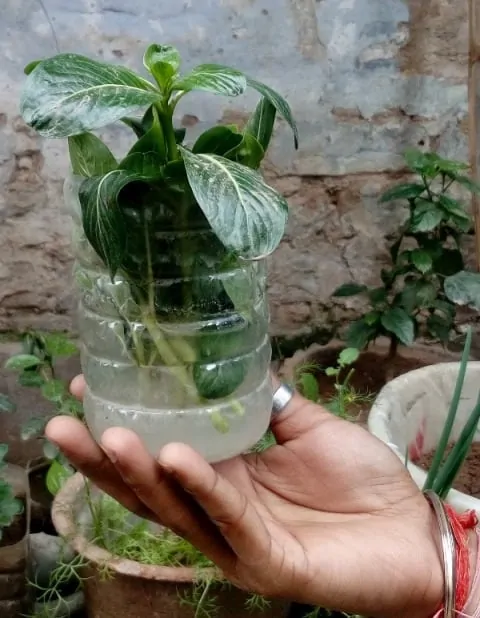
I’d start with moist perlite or an airy propagation mix so the stem gets moisture and air. Use clean coarse horticultural sand if you are testing a sand-based medium. The surface should feel damp without leaving the base in standing water. If you try water, use a clean glass, keep the leaves above the water, and move rooted cuttings to potting mix carefully.
What to check if a cutting fails
If the stem turns mushy, discard it and check that the next pot drains freely. If the cutting wilts while the mix is moist, move it away from heat or direct sunlight. Never fertilize to make up for a cutting that has yet to root. For a different warm-season plant, see my Portulaca growing and propagation guide.

Is your plant annual vinca or a creeping periwinkle?
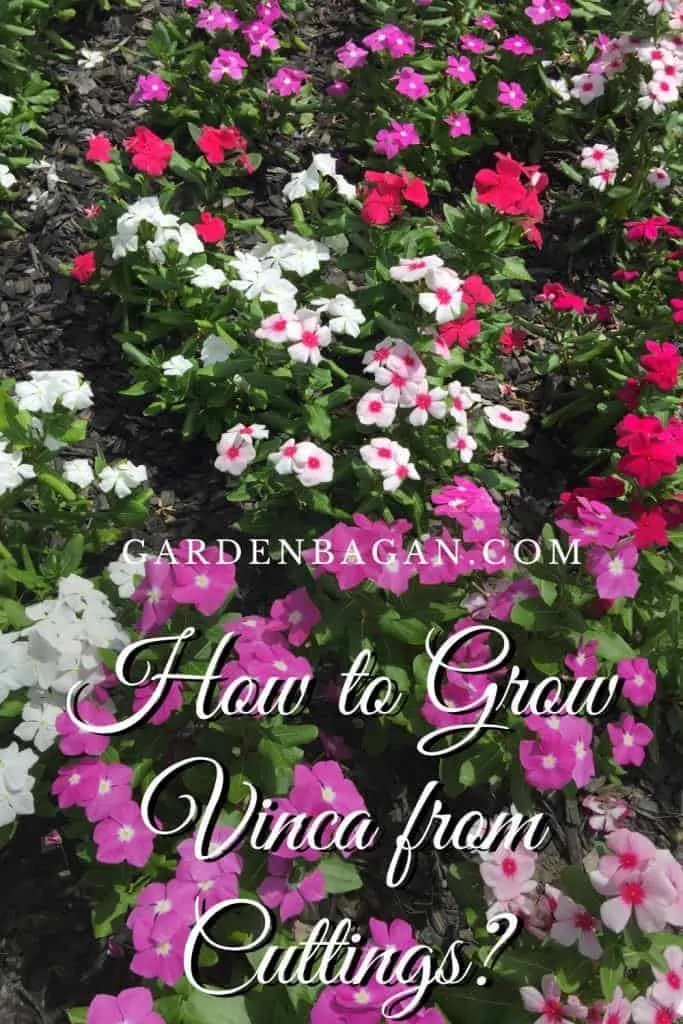
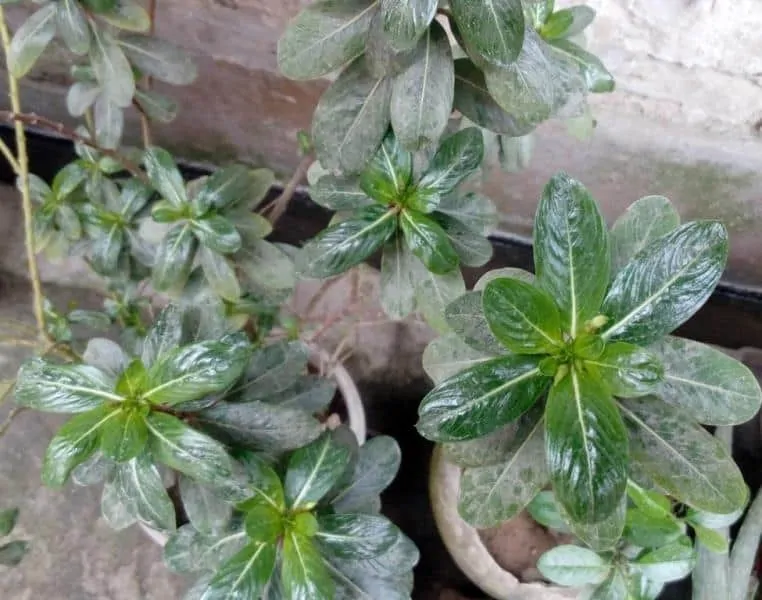
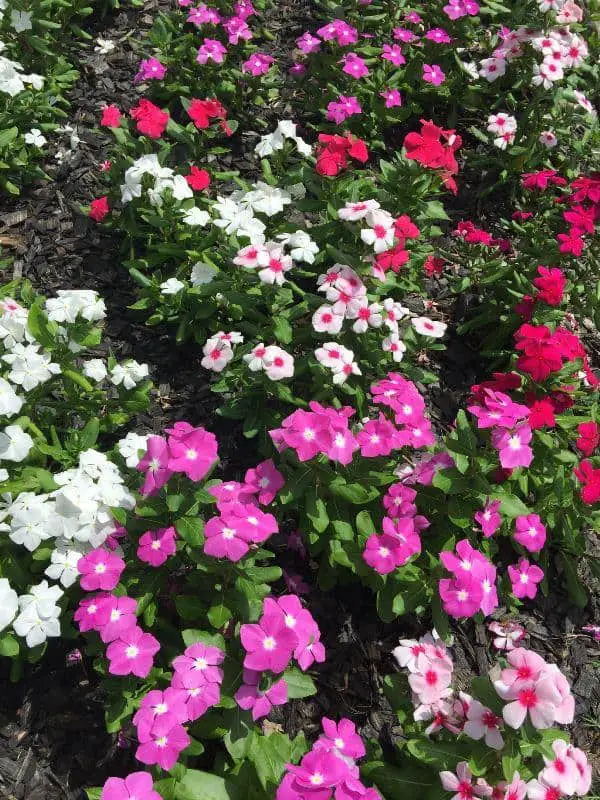
Look at the plant label before you take a cutting. Annual vinca, also called sadabahar or Madagascar periwinkle, is Catharanthus roseus. Older labels may say Vinca rosea. Its pink or white flowers often have an eye in the centre. Many varieties form a mound, although there are trailing cultivars as well. A plant that hangs over the rim of a basket can still be annual vinca.
Vinca minor and Vinca major are different plants that are also called periwinkle. They commonly grow as creeping groundcovers. If your plant was bought as a groundcover or the label gives either of those names, look up that species before using these directions. When in doubt, check the botanical name with the nursery. A photo of the whole plant and its leaves is more useful for identification than a photo of a single flower.
When and where to take a cutting
The Royal Horticultural Society lists softwood cuttings in late spring or semi-hardwood cuttings in summer. The month matters less than the state of the parent plant if you garden in a warm climate. Look for active growth and a firm shoot tip. I would skip a plant whose stems are collapsing, whose leaves have suspicious spots, or whose pot has stayed soaked after a week of rain.
A healthy tip with several leaves is enough. Choose one without an open flower if possible. If the only suitable shoot has a bud, remove the bud before rooting the cutting. This also makes it easier to keep the tip clear of the cover. Cut several shoots if the parent has enough spare growth, but keep them in separately labelled pots or cells so you can compare how they do.
Have the mix ready before you cut anything. Water the rooting medium so it is evenly damp, then let excess water drain. Take a short shoot tip with clean snips and remove the leaves from its lower portion. Make the planting hole first so you can slide the stem in without bending it. Bury a bare node, where a leaf was attached, and keep the remaining leaves above the medium.
Which rooting medium should you try first?
| Medium | When it makes sense | What to check |
|---|---|---|
| Moist perlite | My first choice for a small batch. Iowa State Extension recommends it for annual cuttings and lists annual vinca among the plants to try. | Use a pot with holes and check moisture rather than watering on a schedule. |
| Coarse horticultural sand or an airy propagation mix | Useful when you already have a clean, free-draining medium. | Avoid fine sand or dense garden soil that packs around the stem. Keep the base moist without leaving it in standing water. |
| Water | An optional small trial if you want to see root growth. Keep a second batch in a rooting medium for comparison. | Submerge the bare stem only. Use a clean glass and change the water if it becomes cloudy. Transfer rooted cuttings carefully to potting mix. |
A new cutting has leaves that lose water and no established roots to replace it. That is why an open, moist medium and bright shade are useful together. An airtight bag in direct sunlight can get hot quickly. If you use a clear cover to help prevent wilting, keep it off the leaves and open it to check the mix and remove any damaged material. If the inside is dripping wet, give it more ventilation.
How to tell when the cutting has rooted
Keep an eye on the stem and look for new growth. If you use a clear inner pot with drainage holes, you may see roots without disturbing the cutting. Otherwise, use an occasional gentle tug once the tip looks established. If the stem is still loose, stop pulling. Repeated checks that lift the stem can interrupt rooting. There is no fixed time that applies to every cutting and every growing spot.
Once it has formed roots, move it into a small pot of free-draining potting mix. Lift it with a little of the medium if you can. Hold it by the root ball or a leaf rather than squeezing the stem. Set it at roughly its previous depth, water gently to settle the mix, and let the excess drain. A large pot full of wet mix adds work at this stage. Use a modest pot and move it up when it has grown.
Keep the newly potted plant sheltered initially. If you used a humidity cover, give it gradually longer periods uncovered before removing it for good. Introduce stronger light in stages. The conditions that suit an established vinca in a sunny bed can be too much for a freshly transplanted cutting.
What to change if the cuttings fail
- Black or mushy at the base: Discard the affected cutting. Start again with a healthy shoot, a clean container, and a medium that drains. Check whether a saucer or tight cover was keeping the pot wet.
- Leaves limp while the pot is damp: Move it away from strong sun or hot glass. A rootless cutting can wilt in heat even if the mix is wet. More water will not solve that problem.
- The medium dries very quickly: Check it more frequently or try a loose clear cover in bright shade. Moisten the mix without leaving the pot soaking in a tray.
- Stem stays green but there are no obvious roots: Give it time if it remains healthy. Check warmth and light, and resist pulling it out to inspect it every day.
- The parent plant is declining: Choose a healthy donor. Rooting cuttings from visibly diseased shoots can carry the problem into the next pot.
For the next batch, change one thing at a time. Label each pot with the date and medium. If the two batches came from different-looking shoots, write that down too. Even a small comparison can show whether the trouble was heat, an overly wet medium, or the condition of the plant you started with.
Should you grow from seed instead?
If you want more plants of a particular one you already grow, take cuttings from that plant. If you only want a tray of plants and don’t mind some variation, seed may be the easier route. Read the seed packet for sowing instructions and use a clean starting mix. Whichever route you choose, check the botanical name first. That simple step saves time when you are comparing instructions for several plants sold as periwinkle.
If you expect a cold spell before the cuttings root, move the pots to a bright, frost-free spot. Keep them away from a heater or cold window glass, and wait until the weather settles before planting them outside.
Thank u for sharing in detail. I have a problem. I have planted vinca from cutting from a healthy plant but after properly putting in the pot it looks like the plant is going to die as the leaves are looking sad. How to help them become healthy and save it from dying. Please help. Thanks
Are you sure the cutting was ready for transplant, have you noticed any root growth? If yes, then make sure it gets indirect sunlight until new leaves develop. Also, wait for the soil to dry a bit before watering. Make sure the soil mix is healthy and don’t add any chemical fertilizer. It will not help instead burn the new roots. Don’t worry you are doing good. Just care for your vinca plant and hope for the best. Good luck.
Thank you for sharing the information very comprehensive detailed and providing reasons. It is a very attractive one to learn.