
Last updated: November 21, 2026
Aloe vera needs a potting mix that wets evenly and drains freely. My first choice is a cactus and succulent mix in a pot with drainage holes. If the mix stays wet for too long in your growing spot, add coarse perlite or pumice. I would check the pot and the way it dries before adding fertilizer or trying to change the pH.
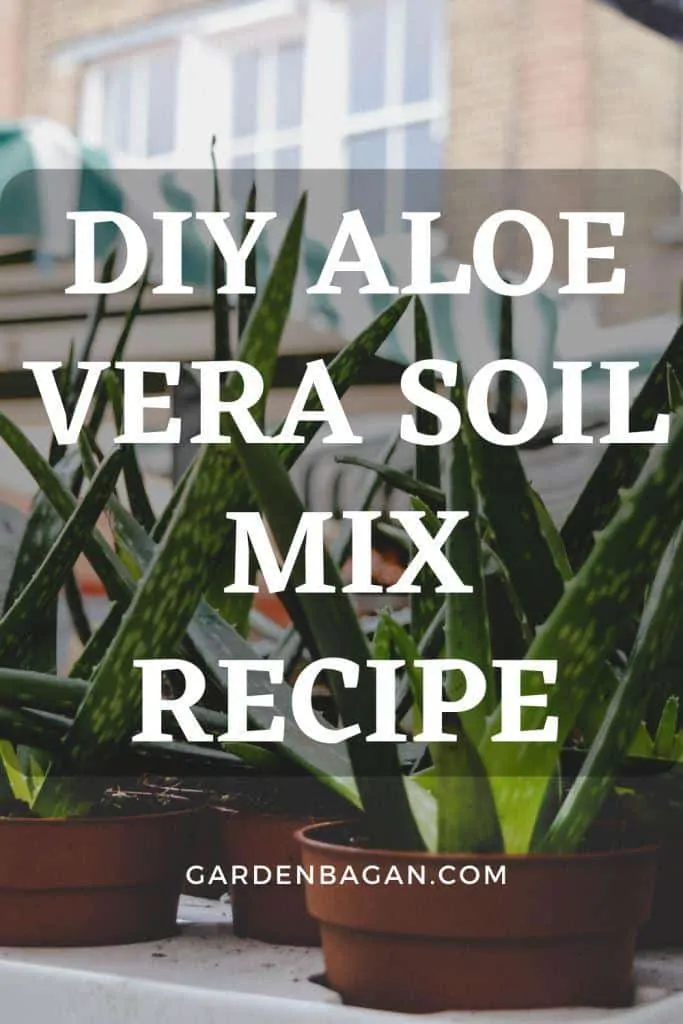
A simple DIY aloe vera soil mix
For a small batch, start with two scoops of cactus or succulent potting mix and one scoop of coarse perlite or pumice. Use the same scoop for both. This is a starting mix you can adjust for your pot and climate. If the bagged mix already feels loose and drains readily, you can use it on its own. If you only have ordinary potting mix, choose a loose container product and add coarse mineral material before testing a small batch.
Perlite keeps the pot light. Pumice is heavier and can help steady a pot with a top-heavy aloe. Dense garden soil can settle and hold water in a container, and fine sand can fill the spaces that let water and air move through the mix. Look for a mix that remains loose after watering.
Pick the pot before mixing a large batch
Use a pot with an open drainage hole. For a small aloe, move up only a little from the old pot so there is room for the roots without leaving a large volume of wet mix around them. An unglazed terracotta pot often dries faster than plastic. In a hot, dry spot that can mean checking it more often. On a terrace during the monsoon it can help to move the pot out of repeated rain.
If you use a decorative outer pot, lift the inner pot out to water and let it finish draining before putting it back. Empty any water that collects underneath. Adding stones to the bottom cannot provide an exit for water in a container with no hole.
Test the mix in the actual pot
- Put some of the prepared mix in an empty pot with the same drainage setup you plan to use.
- Water slowly so the mix wets evenly. Check that water comes out from the bottom.
- Check below the surface again over the next few days. The inside can still feel damp after the top looks dry.
- If the pot remains heavy and wet, first check the holes and where the pot sits. Adjust the mix with more coarse material if it is still slow to dry.
There is no universal number of seconds that proves the mix is right. Water can run down the sides of a very dry pot without wetting the center. That is why I check the mix itself as well as the water coming out.

Repotting and watering
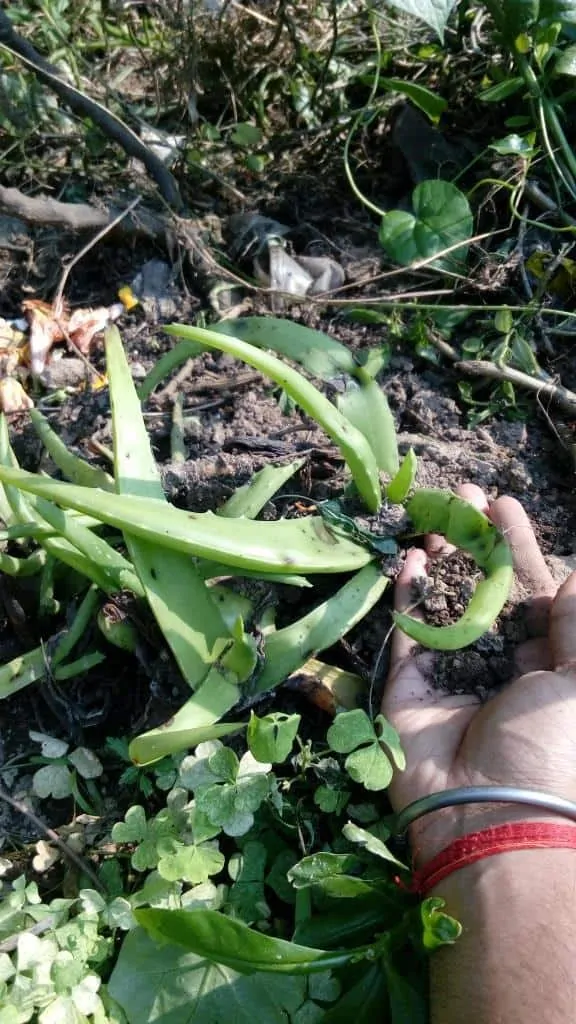
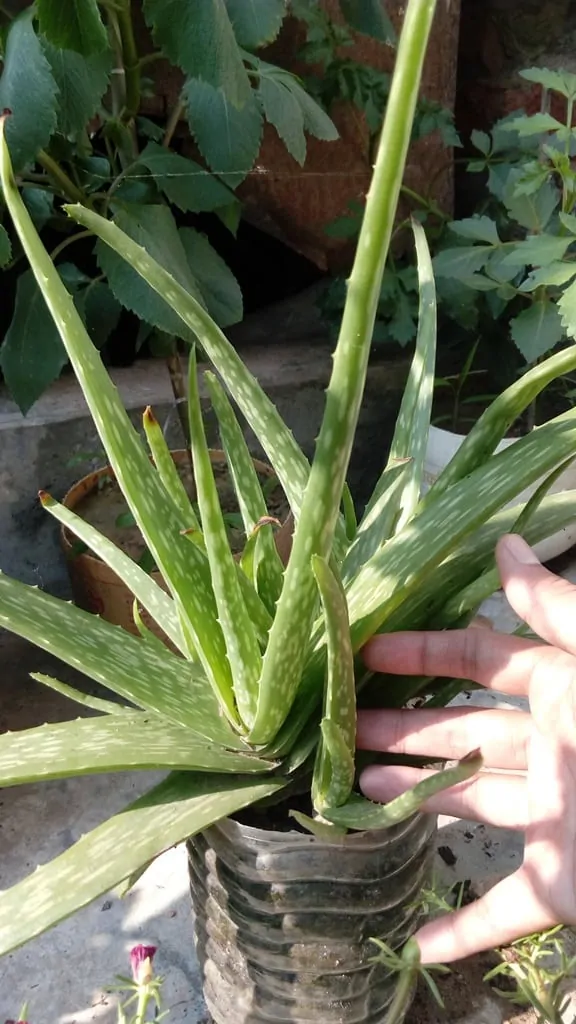
Lift the aloe out carefully and check the roots. Remove loose compacted mix and trim obviously rotten material with a clean tool. Set the plant at about the depth it grew before, with its crown above the mix. Once established, water deeply when the mix has dried and let excess drain. Check less often in cool conditions and more often when the pot sits in heat and wind.
If leaves become soft while the pot stays wet, inspect the roots and drainage before watering again. If you see mushrooms in a pot with otherwise healthy roots, they may be breaking down organic matter. My guide to fungi in garden soil explains why visible fungal growth and plant disease need different checks.
Do you need ash, coffee grounds, or eggshells?
Aloe does not require these ingredients in a container mix. Wood ash changes pH and adds salts, and kitchen scraps make it harder to predict how the mix will behave. Start with a suitable potting mix and fix drainage first. If you suspect a nutrient or pH problem, use a test or have the plant assessed before making corrections. Routine fungicide is unnecessary for a healthy aloe in a freely draining pot.
Which ingredients do you already have?
Start by looking at the bag rather than the name printed on the front. Two mixes sold for succulents can feel quite different. One may contain chunky material throughout. Another may look fine and soft, with only a little grit. Break up a handful and look at what is inside. If you can see coarse particles distributed through the mix and the test pot drains and dries readily, use it as it is before buying anything extra.
If you are starting from an ordinary potting mix, you have a different job. Iowa State Extension gives a starting recipe of one part organic material to two parts mineral material for indoor succulents. Examples include potting mix or coir on the organic side and pumice, perlite, or coarse horticultural sand on the mineral side. The recipe near the top of this guide starts with a bagged succulent mix, which already contains a blend of ingredients. Use the two recipes according to what is in your bag.
- Perlite: Useful when you need a light pot that is easy to move. Mix it through the container rather than sprinkling it on top. Work with it gently and avoid breathing the dust.
- Pumice: A heavier option when a pot with tall leaves tends to tip. Use a grade intended for horticulture rather than fine powder.
- Coarse horticultural sand: An option if you already have the right grade. Keep it separate from fine construction sand or material collected from a beach, where particle size and salts are uncertain.
- Coir or other moisture-holding ingredients: Useful as part of a blend. Check how much the original mix already contains before adding more, particularly if the aloe will sit indoors or under cover.
How to adjust the mix for your growing spot
A pot indoors or in a sheltered corner
Start with a pot close to the size of the root ball. A large pot holds more wet mix around a small set of roots, especially in a spot with little air movement. Check that the inner pot is raised out of any water in the decorative container. If you cannot inspect the bottom easily, keep the plant in a removable nursery pot so you can lift it out for watering and check whether the outer pot is dry.
A sunny terrace or balcony
Use a stable container and consider how often you can reach it to check moisture. A small terracotta pot can dry faster in sun and wind, so test the starter mix before making it grittier. If the plant is used to a sheltered windowsill, introduce stronger light gradually. A new potting mix cannot prevent sunburn if the plant goes straight from shade to a very hot position.
A terrace during the monsoon
Check the roofline above your aloe. Moving the pot a short distance can take it out of a steady drip while leaving it in good light. After heavy rain, feel the mix at the side of the pot and check the base. Move the container to a brighter sheltered spot if it keeps getting wet before it has time to dry. A more open mix helps, but rain that falls into the same pot for several days still needs somewhere to go.
How to tell whether you need to repot now
A plant that is firm, steady in its pot, and drying normally can often stay where it is. Repot if the container cannot drain, the mix has collapsed into a dense mass, or the roots and offsets have crowded the pot so much that watering evenly is difficult. A wobbling plant may also need a more stable pot. Look at the root ball before deciding how much larger to go.
If the leaves look wrinkled, feel the soil before reaching for the watering can. A dry, light pot and a wet, heavy pot call for different checks. If the pot is wet and the plant is declining, inspect the drainage holes and roots. If the pot is very dry, check whether water is slipping down the sides instead of wetting the mix. It can help to water slowly in more than one pass, then allow the pot to drain.
Try a small batch before changing every pot
Mix enough for one container, write down what went into it, and put it in the spot where the aloe will actually live. Check the pot after watering and again when you think it should be drying. If you amend the mix, change one thing at a time. Otherwise, it is hard to tell whether the improvement came from a different pot, less rain, or the extra perlite.
Do the same check when the season changes. A mix that worked well in a warm, breezy month may stay damp much longer once the weather cools. Take the pot’s weight and the feel of the mix as your cues. Once you understand that particular container, it becomes much easier to choose a recipe for another aloe on the same windowsill or terrace.
Great article .. and you are inspiring too who those are in white collar Jon and those people who think agriculture is for only uneducated people . I personally liked the idea which you explained very well to test the soil for water drainage ..thank you so much..