
Sugarcane is a grass, and the part we chew or press is its sweet stem. Sugarcane can also make a botanical fruit. That fruit is a tiny, dry grain that develops in the flower head. The cane you buy at a market is a different part of the plant.
In the kitchen, vegetable describes how people use a plant food. Most of us know mature sugarcane as a crop grown for sweeteners, while some cooks use tender young shoots as a vegetable. Start by asking which part of the plant you mean.
Updated November 23, 2026.
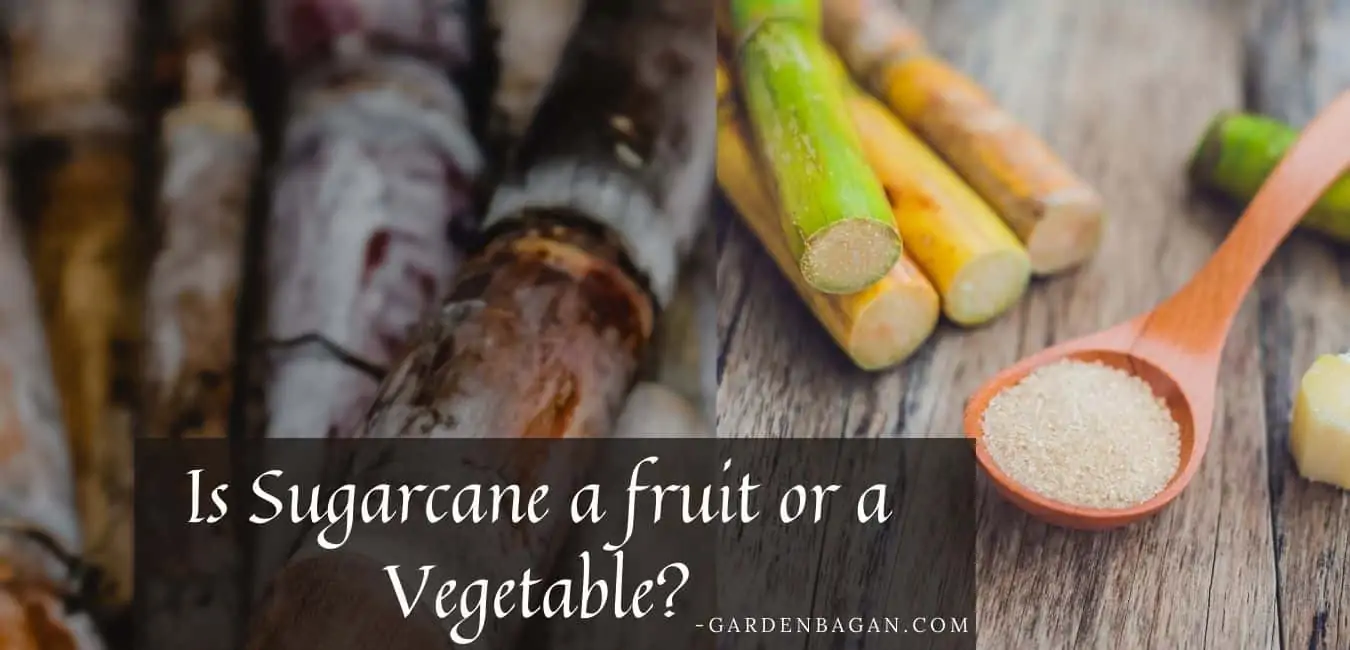
What part of sugarcane do we use?
If you have a piece of cane, find the bands that circle the outside. Each band marks a joint, or node, in the stem. The section between two joints is an internode. Depending on the piece, you may see a small bud beside a joint. The repeated joints and buds give you a clear picture of what you are holding. It is a section of a grass stem.
The stalk has a firm outer rind and a fibrous interior. A mill crushes the stalk to get the juice. When you chew a piece of cane, you squeeze sweet liquid out of the same tissue and discard the tough fiber. The sugar in the juice is mainly sucrose. University of Florida researchers explain the parts of the sugarcane plant.
Botanists call the stem of a grass a culm. You can see something similar on a corn plant. Both plants belong to the grass family, and both have stems with nodes. In cane, the stalk itself is what we mainly harvest. In corn, we typically harvest the kernels.
What to look at if your cane has already been peeled
A peeled piece may have lost the bud and the bands that make identification easy. Look at its cut end. The firm fibers run through the stalk and remain after you squeeze the juice out. If you can, compare it with an unpeeled piece at the same stall. Follow the fibers along the stalk, then find one of the joints. Seeing the inside and the outside together is more useful than comparing the liquid alone with orange juice.
Sugarcane parts at a glance
| What you see | What it is | Where to look |
|---|---|---|
| The upright leafy plant | A grass in the genus Saccharum | Leaves emerge from upright shoots. |
| A market cane | A piece of stalk or culm | Look for rings and the sections between them. |
| A small bud | A growth point that can produce a shoot | Look beside a joint with the rind still in place. |
| A feathery head | A cluster of flowers | Look at the top of a plant that has begun to flower. |
| A tiny dry grain | A botanical fruit called a caryopsis | Look within the mature flower head where fruit has developed. |
| Freshly pressed cane juice | Liquid extracted from the stem | Look at what drains from the press when it crushes the cane. |
Why a sweet stalk is different from a fruit
For the botanical answer, follow how each part develops. An orange begins where a flower grew. When you cut it open, the juicy segments are part of the fruit. A cane grows as a shoot with repeated joints and leaves. When someone cuts the cane into market lengths, the pieces remain stem tissue.
Taste is a handy shortcut in a fruit shop, but it can mislead you in botany. Think of the sweetness of a carrot. The part you eat is mostly a swollen root. In the same way, the sweetness of cane juice tells you what the stalk stores. It gives you no clue that the plant has produced a botanical fruit.
Looking for seeds in a cut stalk cannot settle the question on its own. Some fruits are seedless. A better question is where the part grew. For another easy-to-misidentify crop, see our guide to why a potato is a stem tuber.
Does sugarcane make fruit or seeds?
Yes. When sugarcane flowers, it sends up a feathery head made up of many tiny flowers. The fruit is a caryopsis, a dry fruit with one seed and a thin fruit wall closely joined to the seed coat. Kew’s profile of noble sugarcane describes the fruit of Saccharum officinarum as roughly 1.5 millimetres long.
A trimmed market stalk gives you little chance of seeing the flower head. Most leaves and the tip have already been removed. In a field or garden, flowering depends on the variety and growing conditions. If you buy cane with no seeds in sight, you are looking at the part the grower selected for juice.
Rice and wheat offer familiar examples of grains that are also botanical fruits. In those crops the grain is the harvest. Sugarcane farmers mainly harvest the stem. The difference is in what we take from the plant, even though all three belong to the grass family.
Why growers plant pieces called seed cane
The name seed cane can sound as though growers save little grains from the flowering head. In practice, seed cane is healthy stalk material selected for planting. Growers cut it into sections with viable buds. They may call those sections setts. A bud near a joint can start a shoot, and the planted section can produce roots.
Planting stem sections lets growers maintain the traits of a variety. A shoot starts from the parent plant’s tissue and carries the same genetic makeup. Plants grown from true seed can vary from their parents. This matters when a grower wants cane with predictable qualities for chewing or pressing.
If you look at cane in a garden, notice where the shoots emerge and compare them with the buds along a piece of stem. The UF/IFAS home sugarcane guide covers choosing and planting seed cane. Its seasonal instructions describe Florida conditions. Use a local planting calendar if you live elsewhere.
When can sugarcane be called a vegetable?
Vegetable is a kitchen label. We use it for roots such as carrots, leaves such as spinach and shoots such as asparagus. It helps you find ingredients at the market without having to know how every part developed. A botanist describing a stem or leaf is answering a different question from a cook writing a recipe.
Mature sugarcane usually reaches the market as cane for chewing or pressing, or as processed sugar and other sweeteners. Calling it a sweet stem or sugar crop gives the clearest picture. However, Kew documents a culinary use in India where people sometimes steam or roast young sugarcane shoots as a vegetable. The harvest stage and the way the shoot is served make a difference.
A gardening site may group sugarcane with vegetables because it helps readers find edible plants. If a child asks this question for school, name the specific part instead of relying on the gardening category. The part we usually eat or extract juice from is the stem.
Cane juice, jaggery and the fiber left after pressing
Follow a stalk through a press. Juice runs out and a mass of crushed fiber stays behind. That fiber is called bagasse. It comes from the stalk and has several uses, including as fuel at sugar mills. In a small market press the distinction is easy to see. The sweet juice ends up in a glass and the pressed fibers come out separately.
Concentrating cane juice changes how you use it. In India, cane jaggery, also called gur, is a familiar sweetener made by concentrating cane juice. Mills can also process the juice into crystalline sugar. Each begins with material taken from the stalk. For more on the crop and its products, see CIRAD’s guide to sugarcane uses.
Is sugarcane related to bamboo?
Both belong to the grass family. Their jointed stems can look alike at a glance. In a cut cane, the section between the joints contains juicy tissue. Many familiar bamboos have hollow spaces between their joints, though there are exceptions. Use several clues together when identifying an unfamiliar plant rather than relying on whether the stem looks hollow.
Modern sugarcane can also mean more than one species. Noble sugarcane is Saccharum officinarum. Many commercial varieties have ancestry from several Saccharum species. That is one reason a single species name can oversimplify a conversation about the crop you see in a field. Singapore’s National Parks Board describes sugarcane and its commercial hybrids.
A simple answer for school or the kitchen
For a school question, say sugarcane is a grass grown for its sweet stem. If the question asks whether the plant can produce fruit, add that its actual fruit is a small dry grain that forms in the flowering head. That gives the class both the familiar answer and the botanical detail.
For a kitchen conversation, name the part on the counter. A length of cane is a stalk. The drink is the liquid pressed from it, and sugar or jaggery can be made from that liquid. A tender shoot served as a vegetable is a separate use at a different stage of growth. A label on a recipe tells you what role the plant plays in the dish. A botanical label tells you how that part grew.