
For a steady coriander harvest, sow a small batch in one pot, then sow a second pot about two to three weeks later while the weather still suits leafy growth. Cut a few outer stems from the older batch while the younger plants fill out. Once the old pot starts sending up flower stems, use the remaining good leaves and sow the empty pot again if you still have enough cool weather. Two pots are enough to learn the rhythm. A small third pot can close a gap if your older plants stop yielding leaves before the next batch is ready.
That first gap is normal. Coriander takes time to germinate, grow its first true leaves, and make enough foliage to pick. Staggering the sowings spreads that wait across several batches. It works best for the little handfuls of dhania you want with dal or a sabzi. If you make chutney often, plan a bigger picking or allow one pot to recover while you buy a bunch.
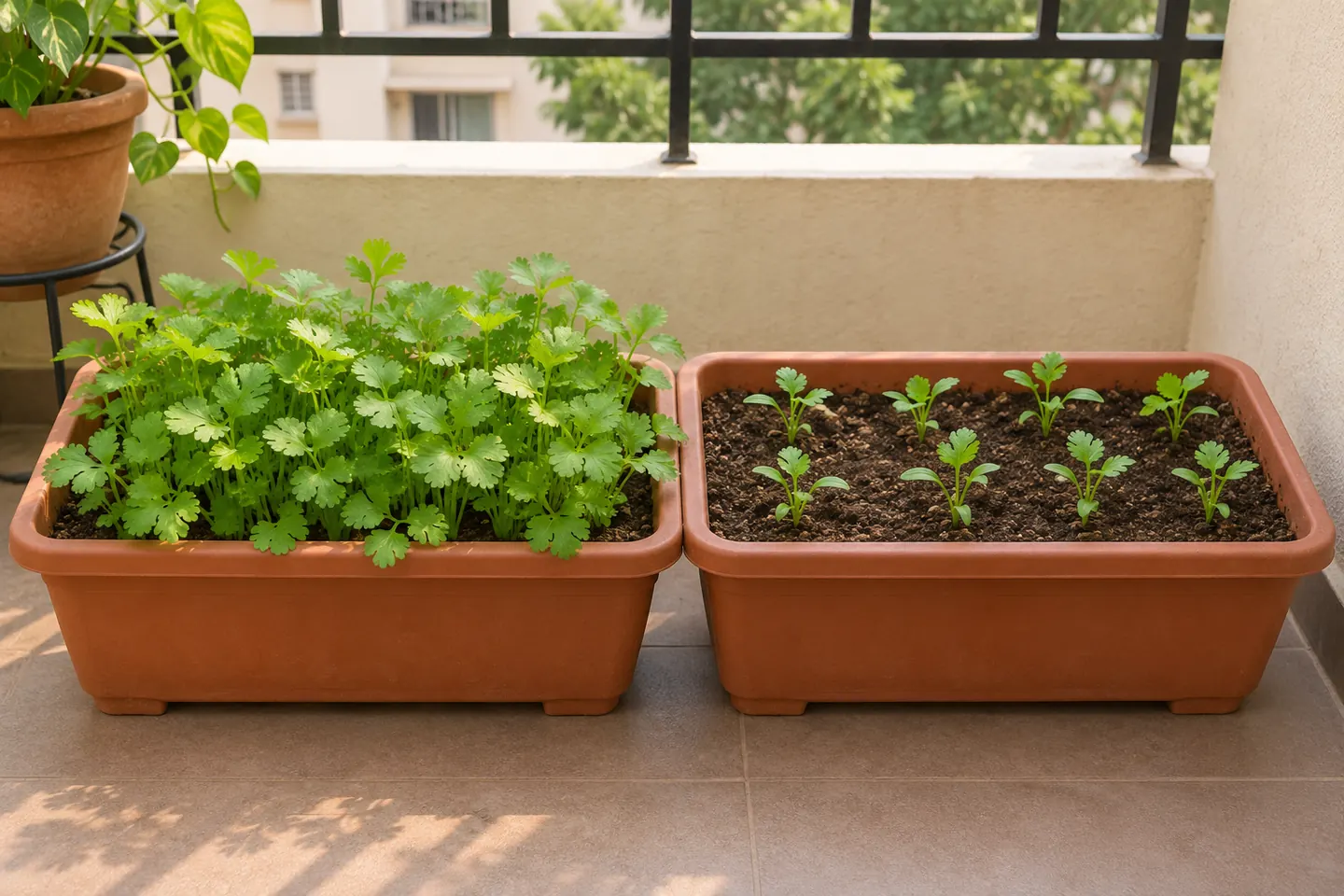
Make a spot for two pots of different ages
Start with two pots or short troughs that have room for a row of plants and enough depth for their roots. Look for about 8 litres of potting mix capacity per batch as a practical starting point. That is close to the lower end of the 2-to-5-US-gallon range in the University of Maryland Extension container guide for small herbs such as coriander. Use containers with open drainage holes and a loose potting mix made for growing in pots. Leave enough room below the rim to water without washing seeds out. If you use a single long container, divide it into two clearly labelled sections. Separate pots are easier because you can clear one batch, water it gently, or move it to a cooler position without disturbing the other.
Start in a bright spot with direct light. If a pot heats up sharply at midday or in the afternoon, try a spot with morning sun and some protection later. Deep shade can give you pale, stretched seedlings. Check where the sun reaches the pot before you settle on a position. The balcony sunlight mapping guide shows how to compare two spots at plant height.
The cool months are a useful starting window in much of northern India. The Indian Institute of Spices Research’s production recommendations give October to November for the North Indian rabi field crop. Treat that as a seasonal reference. A home pot for leaves depends on your local weather, especially how early the balcony heats up or how often it freezes. Work from your area’s sowing advice and the conditions where your pots actually sit. See the winter vegetables in pots guide if you are planning several crops for the same space.
Sow the first batch directly into its pot
- Start with seed sold for planting. Choose a leaf coriander or a variety labelled slow to bolt if that option is available. Slow bolting gives you more room to work with, though hot conditions can still shorten the leaf season. If you want to try whole unroasted kitchen coriander, sow a small test separately. Its age and storage history can affect what comes up.
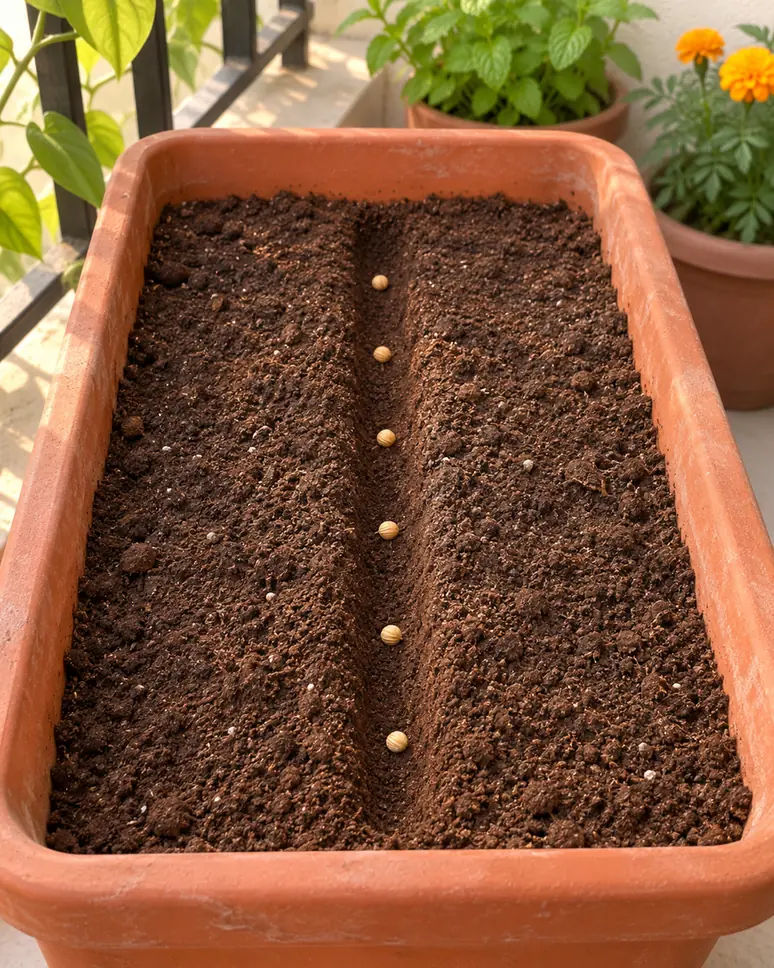
- Moisten the mix before sowing. If the mix is dry all the way through, water first and let the pot drain. Sow into a shallow line. A depth around 6 to 13 mm follows the range reported by the University of Wisconsin–Madison Extension. Use the seed packet if it gives more specific instructions.
- Place seeds with a little room around them. A distance of about 5 cm between sowing positions follows the RHS container guidance. Give mature plants more room if the variety label calls for it. If seedlings form a tangled clump, snip the extras at soil level once you can see which are strongest. The plants you keep can grow in place without having their roots pulled up.
- Cover lightly, water gently and mark the date. Keep the seed zone just moist and let excess water escape. The RHS gives one to three weeks for outdoor germination, depending on temperature. That makes the date label more useful than trying to remember when you scattered the seeds.
Keep the fresh sowing where you can check it easily.
If the mix is still damp just under the surface, wait. If the seed zone is drying, water gently enough to keep the covering in place. Once the plants have grown beyond the seedling stage, water the mix when it starts to dry and let the pot drain properly. Two apparently identical pots can dry at different rates because one gets a little more sun or has a much fuller canopy.
Use a sowing calendar with a backup decision
I would start with an interval of about 18 days and watch what the plants do. That is a manageable rhythm for a small household, and it falls within the two-to-three-week sowing interval recommended by the University of Maryland Extension and Wisconsin Extension. The RHS suggests sowing every few weeks and gives around a month as a broad guide elsewhere on the same page. Your weather and how heavily you pick decide how much overlap you need.
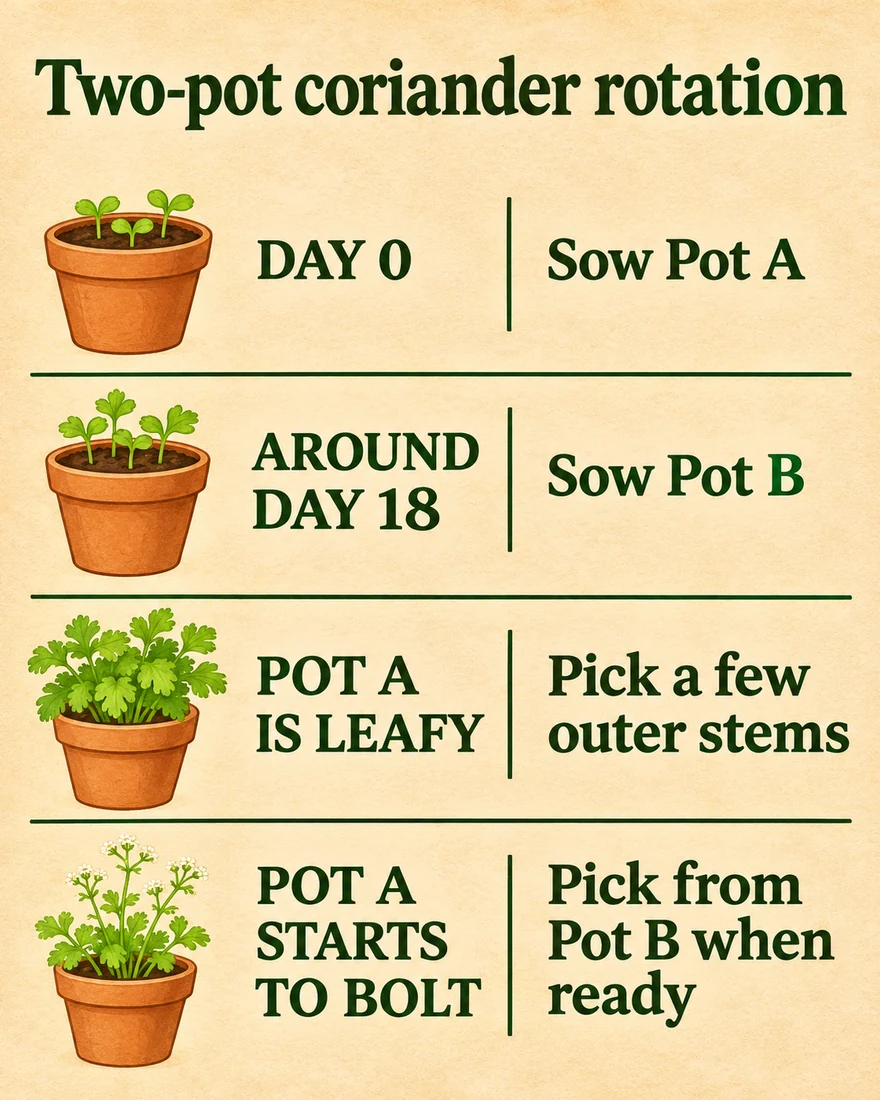
Example rotation for two pots
- Day 0. Sow the first row in Pot A and label it. Leave Pot B unsown, with clean mix ready for the next batch.
- Around day 18. Check emergence in Pot A and thin obvious clumps once the seedlings are easy to distinguish. Sow Pot B even if the plants in A are too small to pick.
- Pot A is around 10–15 cm tall and growing well. Take a few outer stems from A for a meal. Let the younger plants in Pot B put on more leaves.
- Pot A is sending up flower stems or giving little new leafy growth. Take the useful leaves from A, then clear and resow if a cool growing window remains. Start picking from Pot B once those plants have reached a useful size.
What To Understand?
Here is what that looks like if the weather stays cool. You sow A on a Sunday, then B a little over two weeks later. If A is still bare, check it against the germination window. The pot is within that window, and the mix is in good condition; sow B as planned and give A more time. If you find a blocked drain or suspect old seed, fix that before repeating the same setup in B.
Once A has enough foliage for a few garnishes, pick from it over several meals. B may still have little to spare. When you want to make chutney that week, buy the extra leaves or use some from another mature pot. If you make chutney often, sow a third pot well in advance of a future meal so it can mature. When B catches up, pick from B and give A time to recover or clear it if its leaf season is over. The stages matter more than the calendar dates.
Keep a pencil note of the first picking, the first flower stem, and any actual gap. If every batch stopped producing while the next was only seedlings, shorten the interval during a suitable growing window or add a third sowing. Both pots were continually fuller than you could use; widen the interval or sow fewer plants. If every sowing stretches and turns pale, fix the light before trying to fix the timing.
Harvest a little while the plant is still leafy
Begin light picking when plants are roughly 10–15 cm tall, with enough true foliage left to carry on growing. Take a few of the fully formed outer stems and leave the smaller growth in the middle. Spread your picking across the row so one plant does not lose most of its leaves. If the next meal is only a day away, take a few stems elsewhere in the pot and let the first plants recover. For a bigger harvest, Wisconsin Extension describes cutting a bunch about 2.5 cm above the ground and allowing for a possible second cutting. For a steady supply, count on the next sowing and treat that regrowth as extra.
This is where coriander is a little different from the choice in our guide to harvesting methi for a second picking. With methi, you can choose a type and a cutting method to try for regrowth. Here, the useful habit is keeping a younger coriander batch ready to take over. If one pot is well established when the other fades, you can continue to pick without depending on an ageing plant.
Tell bolting from a watering or light problem
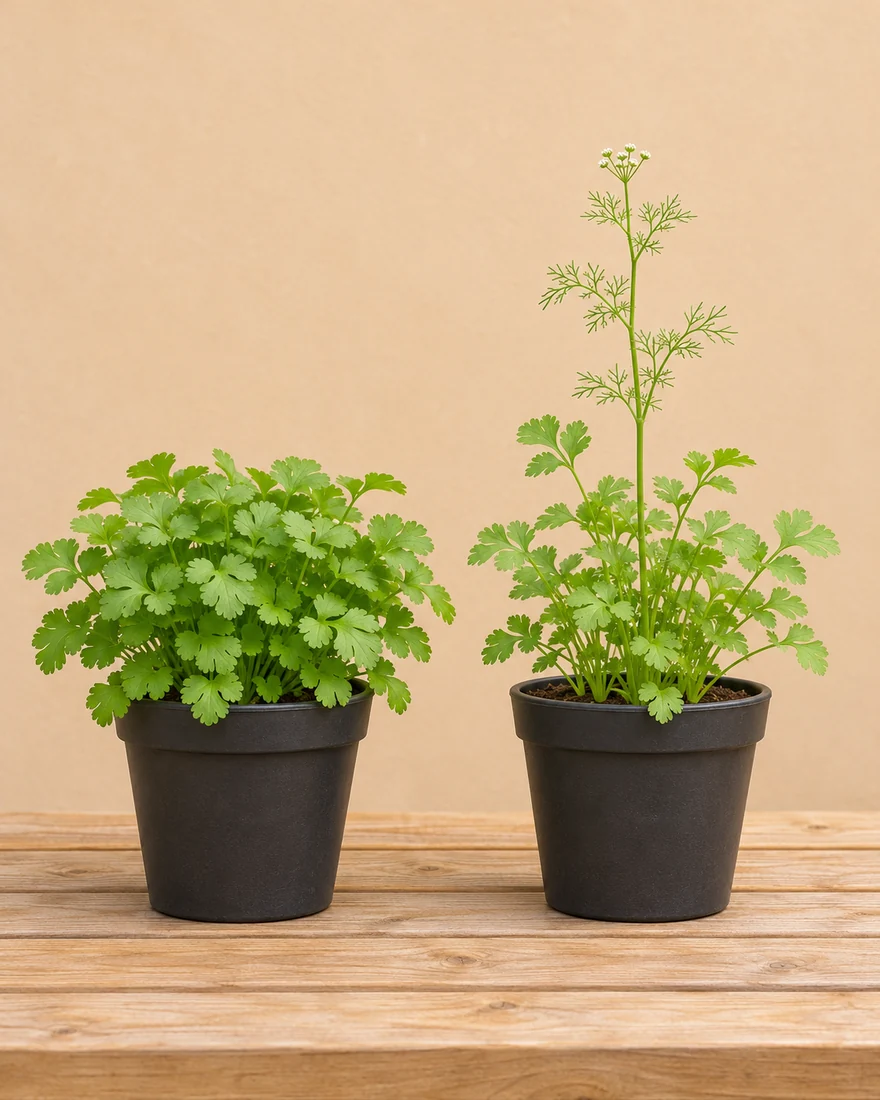
- A taller centre stem and finer leaves near the top: With ordinary broad-leaf types, this combination often signals bolting. Compare the new growth with the flat lower leaves already on the plant. Some varieties naturally have finely divided leaves. Look for the rising stem and flower buds as well, rather than deciding by leaf shape alone.
- Pale, stretched seedlings leaning toward light: Compare the actual direct sun at both pots. Move seedlings gradually to a brighter position that still avoids excessive heat. Check for crowding before adding fertiliser or extra water.
- Seedlings droop while the potting mix stays wet: Check the holes and any standing water in the tray. Let excess water escape and wait until the mix starts to dry before watering again. If seedlings keep collapsing at their bases, clear the affected plants and use fresh mix for the next batch.
- A new row stays bare after the usual germination window: Check which end tends to dry and whether strong watering uncovered or moved the seed. Test a fresh batch of planting seed in one small part of a suitable pot. It will show whether you can establish a new row before you spend more seed.
Pinching an early flower stem can give you time to use some remaining leaves. Once several stems are rising and the weather is getting hot, switch your leaf picking to the younger pot. If you want to save seed, leave a healthy plant in a separate position, let the seed heads dry, and catch the ripening seed in a paper bag. That keeps a seed plant from taking up the slot you need for fresh leaves. If even the younger batch keeps flowering almost as soon as it grows, pause the rotation until you have a cooler growing window.