
When frost is forecast, pick ready vegetables and move small pots of frost-sensitive crops into a protected, frost-free place. For suitable cool-season vegetables staying outside, use a secured horticultural fleece or frost cloth before sunset. A light cover offers limited overnight protection. For prolonged freezing, plan to move tender pots or finish the harvest.
Start while it is still light. A balcony gives you one advantage over a large garden: you can decide what to do with each pot. Bring the most vulnerable plants under shelter, leave hardy crops where they can cope and use a cover only where it makes a difference. You need enough time to make the setup stable before the wind picks up or the temperature drops.
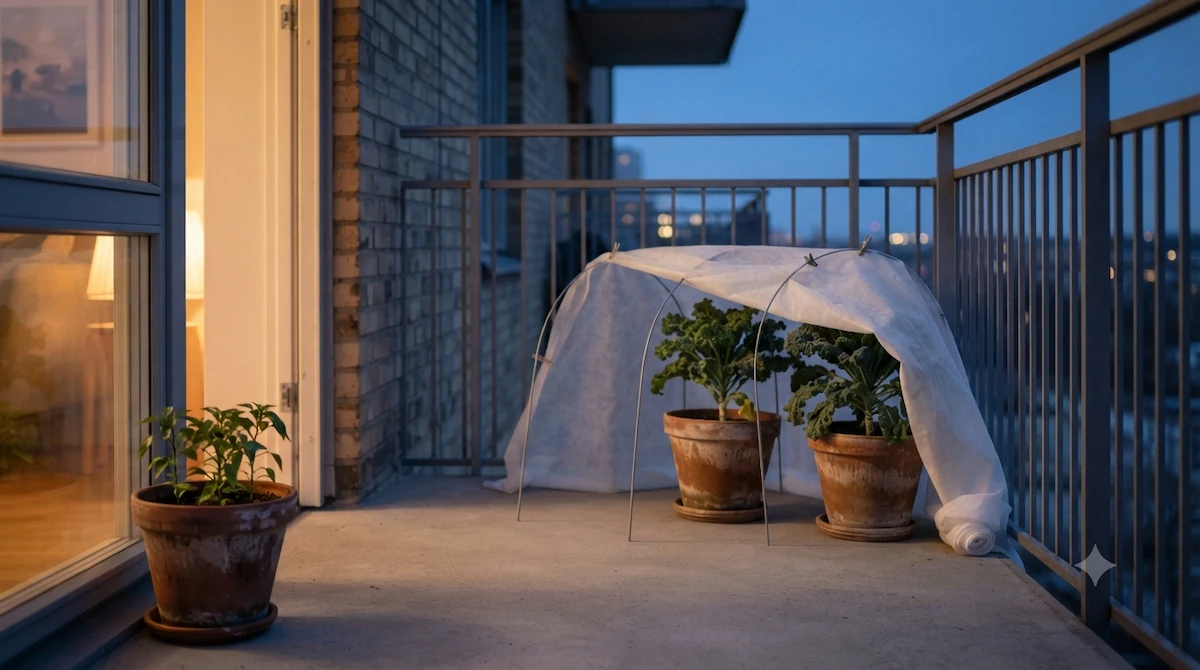
Decide which pots to move, cover or harvest
| What you are growing | What to do before a cold night |
|---|---|
| Tomatoes, peppers, basil or young beans | Pick usable produce and move small pots to a suitable frost-free space. Treat these plants as tender. |
| Established cool-season greens such as kale | Check the cultivar and forecast. If protection is needed for a brief frost, use a supported cover and a sheltered position. |
| New seedlings or recently transplanted greens | Give small pots extra attention. Bring vulnerable plants into shelter when practical. |
| Heavy, exposed trough with market-size produce | Harvest first. Protect what remains only if you can secure a cover safely on the balcony. |
Check the forecast for your address and the number of cold nights expected. A few hours near freezing is a different problem from cold that lasts into the next day or repeats each night. A weather report gives a general air temperature. Leaves near an exposed railing can experience different conditions from the forecast point. Think about where the cold wind comes from and which pots have the least shelter.
Use crop hardiness as a starting point. An established kale plant and a young basil plant cannot be treated as if they respond alike. Even within a cool-season crop, the stage of growth and adjustment to outdoor weather matter. Our winter vegetables in pots guide can help you choose your next planting if cold nights are likely to become routine.
Check the size of the crop you can pick now. For example, you might take full-sized peppers off a small pot, move the plant into shelter if you have room, then spend the remaining daylight putting a cover over established greens. If you cannot move a tall plant without tipping it, make the harvest your first task. The Iowa State Extension frost guide explains which crops need protection and why moving potted tender plants is useful when you have a sheltered space.
Move the tender plants you can lift safely
Bring small tender pots to a frost-free location before the cold arrives. Choose somewhere stable and make sure a wet pot can drain without making a floor slippery. For an overnight stay, a suitable enclosed porch or another protected space may be enough if it truly stays above freezing. If plants must remain indoors for longer, give them suitable light and adjust watering to the new conditions.
Inspect the stems, leaf undersides, and the pot rim as you move them. A quick check helps you avoid bringing an unnoticed pest into contact with houseplants. Keep them separate if you can. Avoid the direct blast of a heater. The goal is to protect the leaves and roots from freezing while avoiding another stressful change.
Leave heavy planters in place if moving them would put you at risk. You can harvest before the frost and protect what remains if the container and cover can be secured. Keep pots and weights on your side of the railing. Make sure a cover cannot blow away or block a shared path. Skip the setup when the wind makes it unsafe to handle.
Use a supported cover for a short frost
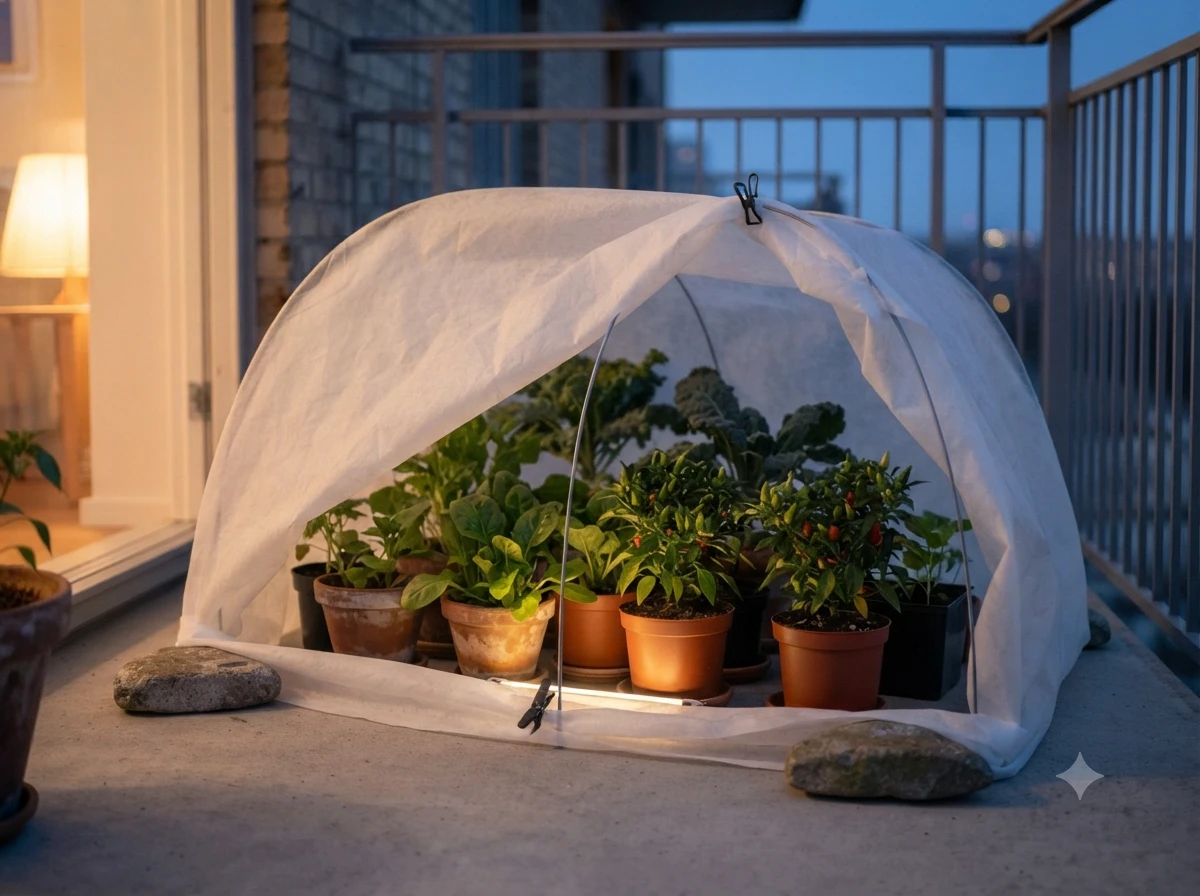
- Start with a sheltered position. If the pots are small enough to move, group the ones you will cover in a stable spot out of the direct wind. Match pots with similar needs rather than trying to make one cover serve everything.
- Set up a low frame. Use short hoops or supports that cannot tip easily. Leave air space around the foliage. Keep the frame inside the balcony and away from doors or access routes.
- Drape the cloth before sunset. Use breathable horticultural fleece or frost cloth and make sure it encloses the plants. Bring the edges down and secure them at the base of the setup. Open gaps let wind lift the material.
- Secure it with what you can control. Use clips fitted to the frame or weights that cannot shift or fall. Check that the cloth will not whip across plants or reach beyond the balcony. A heavy sheet can sag when wet.
- Check the next morning. Open the cover once conditions are warm enough. If the weather stays cold, monitor the air beneath it. Even a cool day can become warm under a cover in direct sun.
The University of Minnesota Extension season-extension guide explains how covers differ in insulation, light transmission and support needs. Use your product instructions and the actual forecast. A temperature rating from a field trial or a particular cloth does not promise that much protection for a windy balcony.
Why wrapping the pot and covering the leaves do different jobs
Frost cloth makes a sheltered space around the leaves. A container still has exposed sides and less soil around its roots than plants in a garden bed. Moving pots away from the rail and grouping them can reduce direct exposure. For longer cold spells, consider whether the roots can tolerate the expected conditions at all. Tender plants still need frost-free shelter.
NC State Extension’s container handbook explains why some outdoor pots need insulation around the root ball over winter. For a one-night vegetable crop, a temporary cover and shelter may be enough for hardy plants. For repeated freezing, use crop-specific winter advice. Keep drainage holes clear if you add insulation around the sides of a pot.
Check the mix earlier in the day. If a plant needs water, water it while the mix can still drain before dark. If the pot is already damp, leave it alone and empty any standing water. Do not flood a pot in the hope of preventing frost. Covering leaves and protecting the root ball are better tools for this situation than improvising an overnight watering system.
What to do when you only have a sheet or plastic
A lightweight sheet can work as a short-term cover if a frame can hold it off the leaves and you can keep it firmly in place. Wet material can become heavier, especially if you leave it out during drizzle or wind. Choose a setup you can put up and remove on your own safely. A large loose sheet near a railing can be a bigger problem than the frost.
Clear plastic needs a supporting frame and attentive ventilation. Do not let it rest on the leaves. A sunny morning can heat an enclosed space rapidly, and the seal you wanted overnight can become a problem once the sun hits it. For a small balcony and a workable forecast, breathable plant fleece is easier to manage. For deep cold, move pots you can move and harvest the rest rather than relying on a single improvised layer. The Colorado State University Extension frost guide describes framing and ventilation for season-extension covers.
Check the plants after the frost has lifted
Look at the plants once they have thawed and the morning has warmed. Dark, soft, or water-soaked patches can indicate frost damage. A leaf that seems limp right away may look different after several hours. Let that change happen before cutting back a whole crop. Check the central growing point or the nearest healthy leaves.
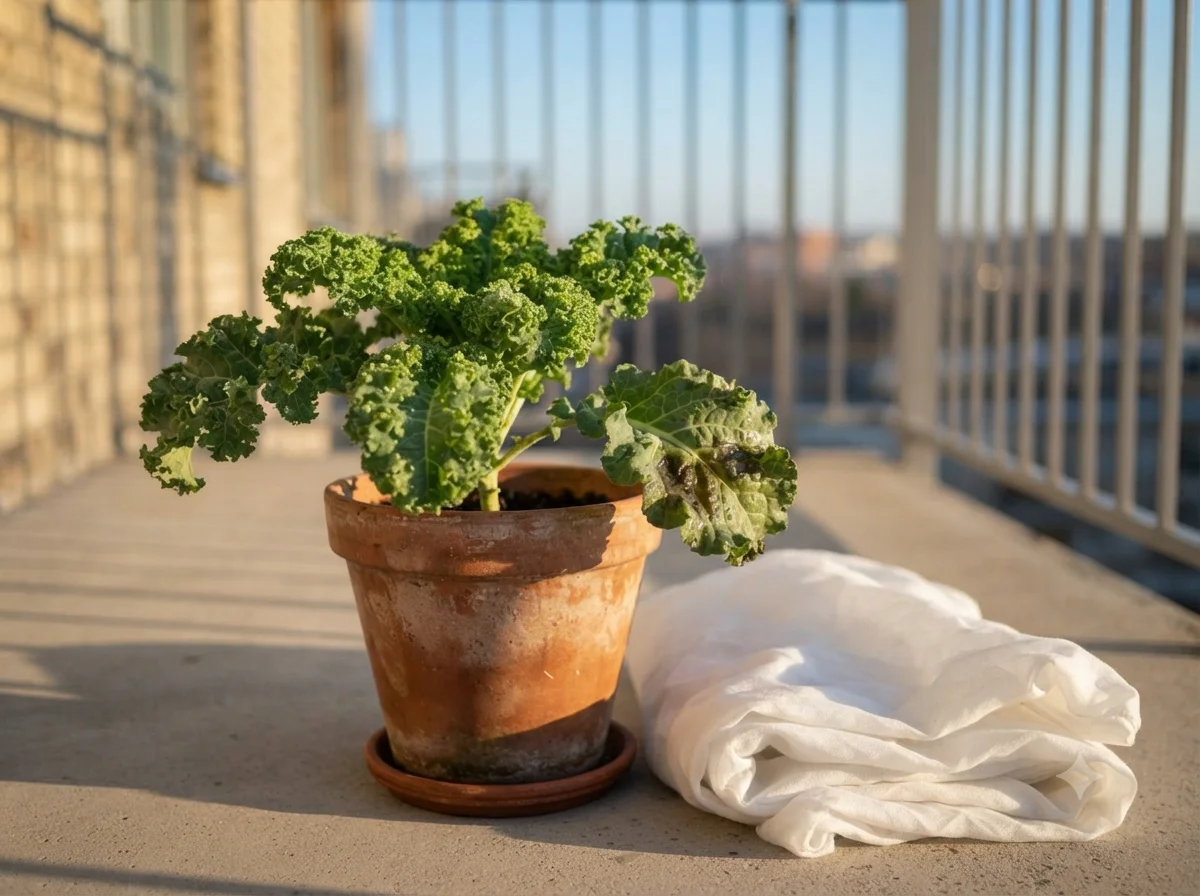
Save and use sound produce you picked before frost. Discard soft, decaying produce. If an established cool-season crop still has a healthy centre, give it time to show what growth remains. Take off dead, mushy material once you can distinguish it from healthy tissue. Keep a note where the damage was worst. The exposed corner that caught cold and wind this time may do the same on the next clear night.
Make the next cold night easier
Keep a small group of pots you routinely move and a separate group you protect where they stand. Store dry fleece, clean clips and suitable supports together. Check clearance around the pots in daylight so you know they fit beneath the cover. The next time the forecast changes, you will know which plants to move first and which crops to pick before the light goes.
If frost becomes a regular feature of the season, plan the next sowing for your local conditions. Covering is a bridge for a short dip or a limited stretch. It takes less work to grow a cool-season plant suited to your balcony than to bring a row of tender pots in and out for weeks.
Keep a simple record of the forecast, the spot where each pot stood, and what you saw the next morning. You may find that one corner needs more shelter on clear nights, while a pot close to the building fares better. Repeat the same checks before deciding which part of the balcony to plant next.