
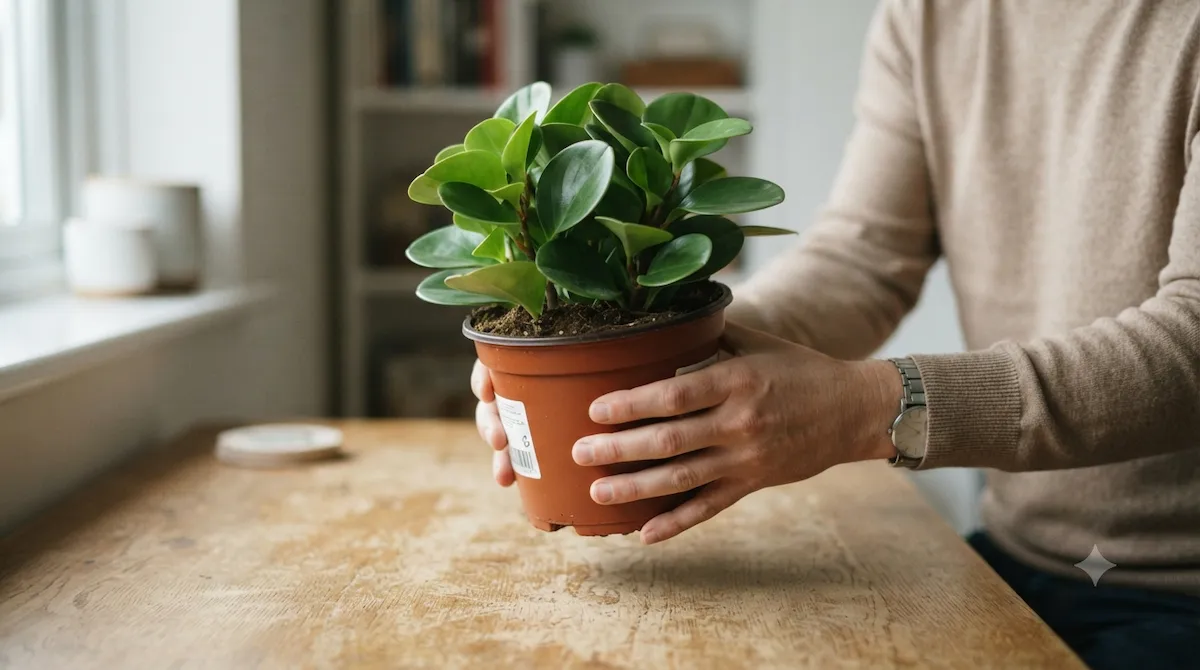
To use pot weight as a watering clue, lift a small houseplant pot after watering and draining it. Lift the same pot again as it dries. When it feels noticeably lighter, check moisture below the surface and water only if the mix has reached the level of dryness that suits that plant.
If you’ve watered a pot because the surface looked dry and later found the bottom still damp, this is a useful second check. The idea is to learn the difference between two states of the same pot. You can start by feel. A scale helps if you like a written record, but a number still needs a root-zone check.
Why a pot gets lighter as the mix dries
The growing mix holds water after you finish watering. Over the next few days, the plant uses some and the mix loses some through evaporation. The pot has less water in it, so it weighs less. That’s the change you’re learning to recognize. The container, plant, stake, and dry mix also have weight, so there is no single reading that tells you how wet every plant is.
The surface can dry before the lower part of the root ball. Conversely, a little water on the top can darken the surface without reaching much farther down. A lift gives you a useful check on the whole pot. It cannot tell you where that water is sitting, which is why it works best alongside an inspection of the mix. Virginia Cooperative Extension’s container houseplant watering guide describes using weight, checking for dry spots, and dealing with a mix that has become difficult to wet.
Learn how one pot feels in two conditions
- Choose one plant you can lift safely. Start with a small nursery pot with holes rather than a large planter. If it sits in a decorative outer pot, lift the inner pot and look for standing water underneath.
- Water the next time the plant actually needs it. Wet the mix evenly under normal conditions for that species and let the excess drain. Empty the saucer or outer pot. This is your watered reference, after free water has drained.
- Lift the same pot the same way. Support the bottom as well as the side and remember how heavy it feels. Compare the inner pot by itself each time, without a detachable saucer or cover adding weight.
- Recheck as the mix dries. Lift the pot and feel below the surface where you can reach the mix without damaging roots. Notice when the plant reaches its normal watering point. That is the lighter reference you want to remember.
- Repeat for another cycle. Use both clues again when the same plant needs water. If they disagree, check drainage and moisture in more than one spot before adding water.
You don’t need to wait for a plant to wilt or let the root ball become completely dry to learn the lighter weight. A fern that prefers consistent moisture may be ready before a succulent nearby. The goal is to match the weight to this plant’s next watering point. If you have several similar plants, practice on one for a week or two rather than assuming the same cue applies to all of them.
How to use a kitchen scale if the difference is subtle
Use a scale only for a stable pot within its capacity. Place the pot on a flat, dry surface, with the same accessories each time. If using a separate tray to protect the scale, use the same tray for each measurement or tare it first. Store the two readings with the plant name, date, and what the mix felt like at each point.
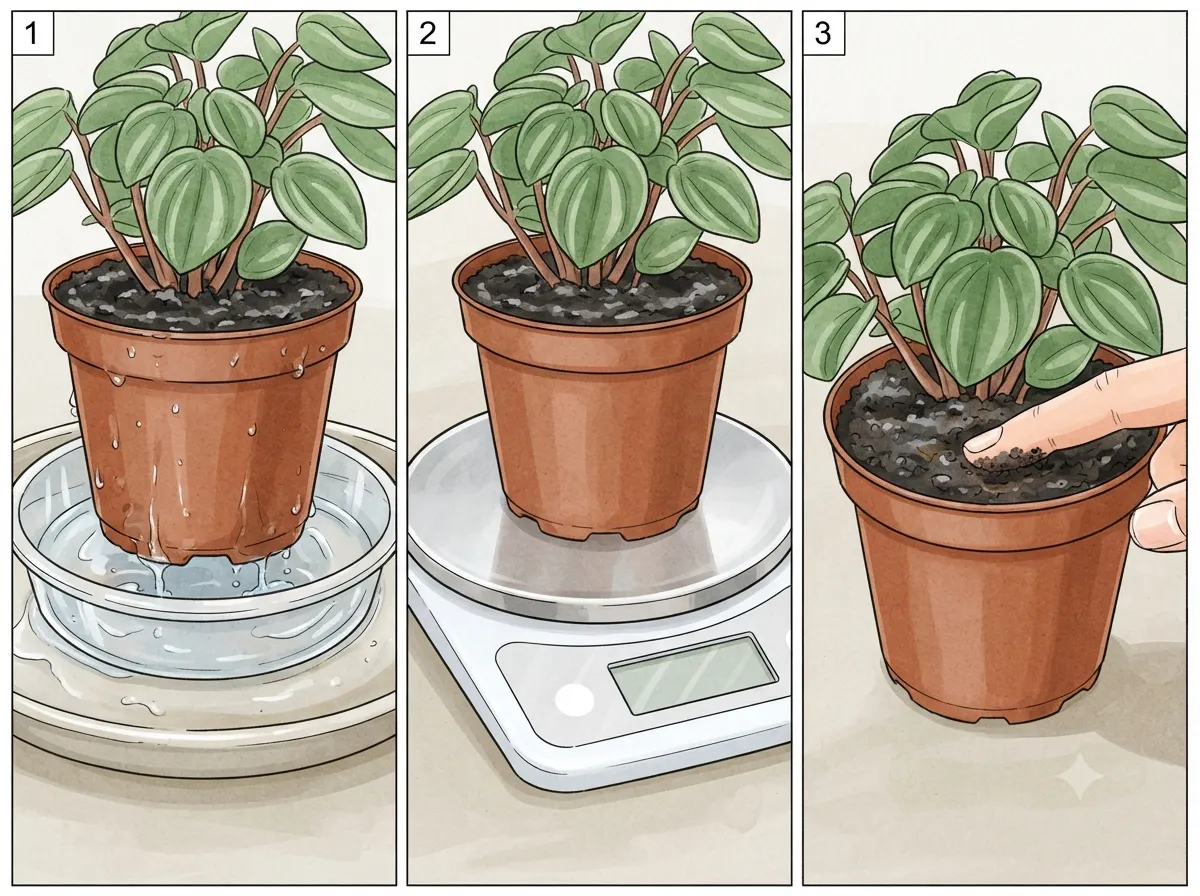
Here is a hypothetical example for one small pot. It weighs 690 g after watering and draining. At a later check, it weighs 545 g, and the mix just below the surface still feels damp enough for this plant. At 500 g, the mix reaches the point where you would normally water this plant. Write down 500 g as a cue for this pot. Another plant might be ready at a higher weight or a lower one. The 190 g difference is a reading for that pot. Use the condition of the mix to guide watering.
If you water when the pot hits the recorded number but the mix still feels wet, trust the additional check and look for a reason. You may have changed the container, trimmed the plant or removed a stake. Recent changes to the drainage or a colder room can change where the remaining moisture sits. A scale is most useful once the physical setup stays consistent.
What to do when weight and moisture disagree
| What you notice | What to check before watering |
|---|---|
| Dry surface, pot still heavy | Feel below the surface and check the saucer or outer pot. The lower mix may still hold plenty of water. |
| Light pot, water runs out immediately | Look for dry mix that is repelling water or a gap along the pot wall. Check where the water went. |
| Heavy pot, leaves drooping | Inspect drainage and the root zone before adding water. Wilt can follow stressed roots as well as dry mix. |
| Light pot, top layer slightly damp | Check a little farther down where possible. A recent splash or mist may have moistened only the surface. |
Dry mix can shrink away from the edge, creating a channel where water bypasses the center. Try adding water slowly in small passes and checking at a reachable depth. For a suitable plant in a pot with drainage holes, brief bottom watering can help the mix take up water. Take it out of the water after the mix has wetted sufficiently and let it drain well. Virginia Cooperative Extension explains both methods and why runoff alone is a poor way to measure hydration.
For a heavy pot that stays wet, first check for blocked holes or an outer pot full of water. Empty it and give the mix time to dry to the right condition for that species. If the plant continues to decline, inspect the root zone as appropriate for the plant. More water will not solve a drainage problem. The University of Maryland Extension indoor watering guide explains how to use the feel of the pot and the condition of the mix together.
When to relearn the reference weight
After repotting, treat the plant as a fresh setup. A larger pot, a different container material, and more mix all change the baseline. A plastic pot and a ceramic pot can feel very different before you add any water. Terracotta can absorb moisture too. Compare your plant with itself, knowing that a porous pot’s weight includes moisture in the pot as well as in the mix.
Also recheck after a large prune, adding a stake, replacing a cover pot, or adding a thick layer of decorative material. If the container tends to dry unevenly, use a moisture check at a reachable depth every time, until you understand the pattern. A small pot in winter light may take longer to reach its watering point than it did near an open summer window. Keep your normal reminder to inspect, then let the plant tell you whether it is time to water.
Mark the date in your notes when you move a pot into stronger light or closer to warm, dry air. Then compare how soon it becomes lighter. A slower rate can be perfectly normal in a cooler spot. If the pot still feels heavy and the plant is declining, the moisture check gives you a starting point for diagnosing the problem instead of watering every few days by habit.
When lifting the pot isn’t the right check
Leave large pots, fragile hanging baskets and awkward planters in place if you cannot lift them safely. Check the mix at a few accessible points instead. For a large container, a surface reading at one edge may not represent the area nearer the main roots. Keep notes on when you last watered and whether the pot sits near a door, heater, or cold window. If the plant has a reservoir, consult the planter’s instructions, because water stored below the mix can change the weight without telling you how wet the roots are.
For an aloe or another plant in a fast-draining mix, use its own care requirements when deciding how far to let the mix dry. See our aloe vera potting mix guide for an example of how the growing medium changes water management. Train yourself on an easy pot first. Water at the plant’s normal point, notice its drained weight, and check it again as it dries. That gives you a useful habit even if you never write down a number.
Use the check when someone else waters your plants
If you share plant care, leave each plant with its own instructions. “Check the small fern on Tuesday” gives the other person a useful reminder. Add what to feel for and which pot to lift. Explain where to empty the saucer, since water hiding there can make a plant look as if it was watered properly while its root ball stays too wet. If a plant needs unusually dry conditions, mark that separately.
Keep a note of which pots were watered. You can then start from the last known check instead of giving everything water again when you get home.