
Choose a small round salad radish such as Cherry Belle, sow it directly in a pot with drainage holes, and thin the seedlings while they are small. Give each plant room to swell and keep the mix evenly moist. Start looking for harvestable roots around the time on the packet, then pull a test radish rather than waiting for every plant to look the same.
If you have room for one tub on a balcony, a round salad radish is a manageable first crop. The trick is to plan for the size of the roots you want rather than filling the pot with seedlings. Choose a cool spell, give the plants enough light, and keep a close eye on the pot once the shoulders begin to show.
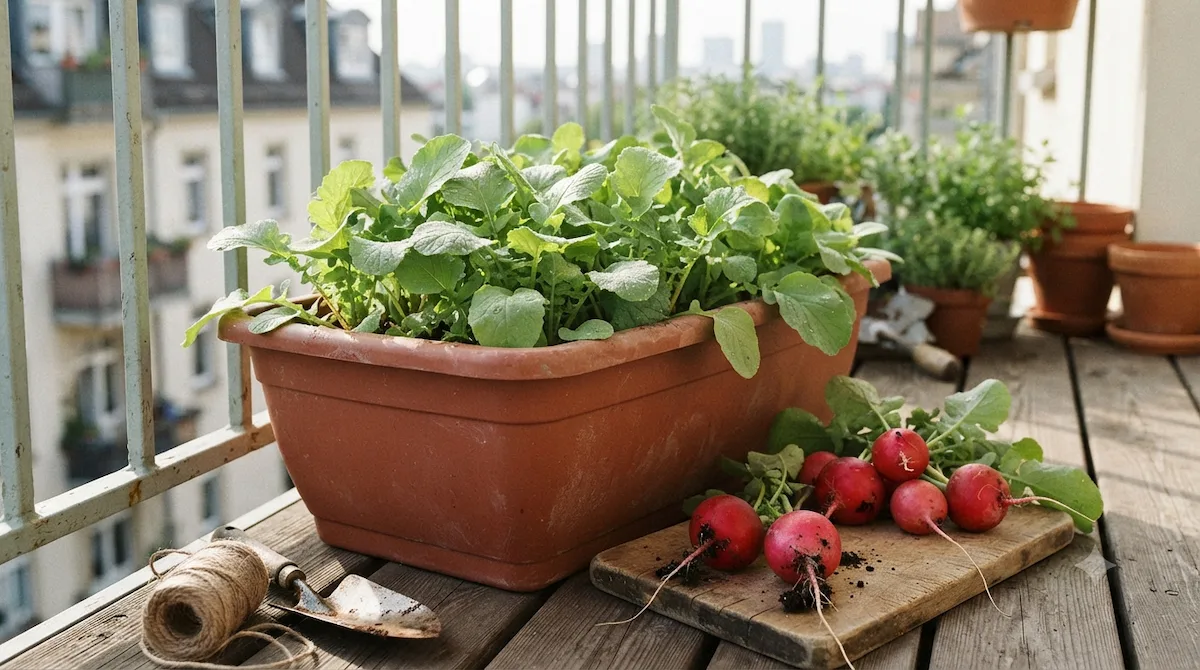
Pick a round radish that fits your pot
Look for a packet that describes a small, quick-growing salad root. Cherry Belle is a red globe type. The RHS lists Purple Plum as another salad radish option in its radish growing activity. Round shape by itself doesn’t tell you how much space to reserve. A large round winter radish can need wider spacing and a longer season than a small salad variety. Use the full variety description and plant to the packet’s instructions.
Compare packet dates before you buy. A stated number of days to harvest describes a variety under suitable conditions. A cooler stretch or reduced light can delay the crop. If the packet describes a small round root but gives no harvest size, use a sample root to decide when the rest are ready. The older leaves are less useful than the root’s appearance and texture.
Choose a pot and prepare the mix
A stable tub about 30 cm (12 in) wide and deep is a straightforward starting point. The RHS radish guide recommends a container of at least that size for short-rooted salad radishes. The width gives you room to set out seedlings, and the extra mix makes it easier to keep the root zone evenly moist. A narrow decorative pot that holds the same depth can still leave you with too little planting area.
Check that the bottom holes are open. Use fresh container potting mix that holds moisture but drains, and crumble any large lumps as you fill. Leave room at the top to water without pushing seeds or mix over the rim. If the dry mix repels water, dampen it gradually before sowing. You should be able to smooth the surface without turning it into a wet paste.
Set the pot where the foliage will get direct light for a useful part of the day. Buildings and railings can cast longer shadows than you expect, especially in winter. Watch the spot for a day before choosing it. If you have a sunny patch that becomes intensely hot in the afternoon, try a cool-season sowing and watch the pot closely for drying.
Sow directly and thin for full-sized roots
- Dampen and level the mix. Water it first and let excess drain. A level surface helps water reach the whole pot rather than running into a low corner.
- Lay out the seeds where you want the roots. For a small round salad variety, arrange the seeds in short rows or a loose grid. Use the packet’s spacing. Cherry Belle guidance from the RHS suggests a final spacing of around 3 cm (a little over 1 in). Give large-rooted varieties more room as their packet directs.
- Cover and label. Use the packet’s depth. Illinois Extension recommends ¼–½ in (about 6–13 mm) for radish seed generally. Cover lightly and water gently so the seeds stay where you put them.
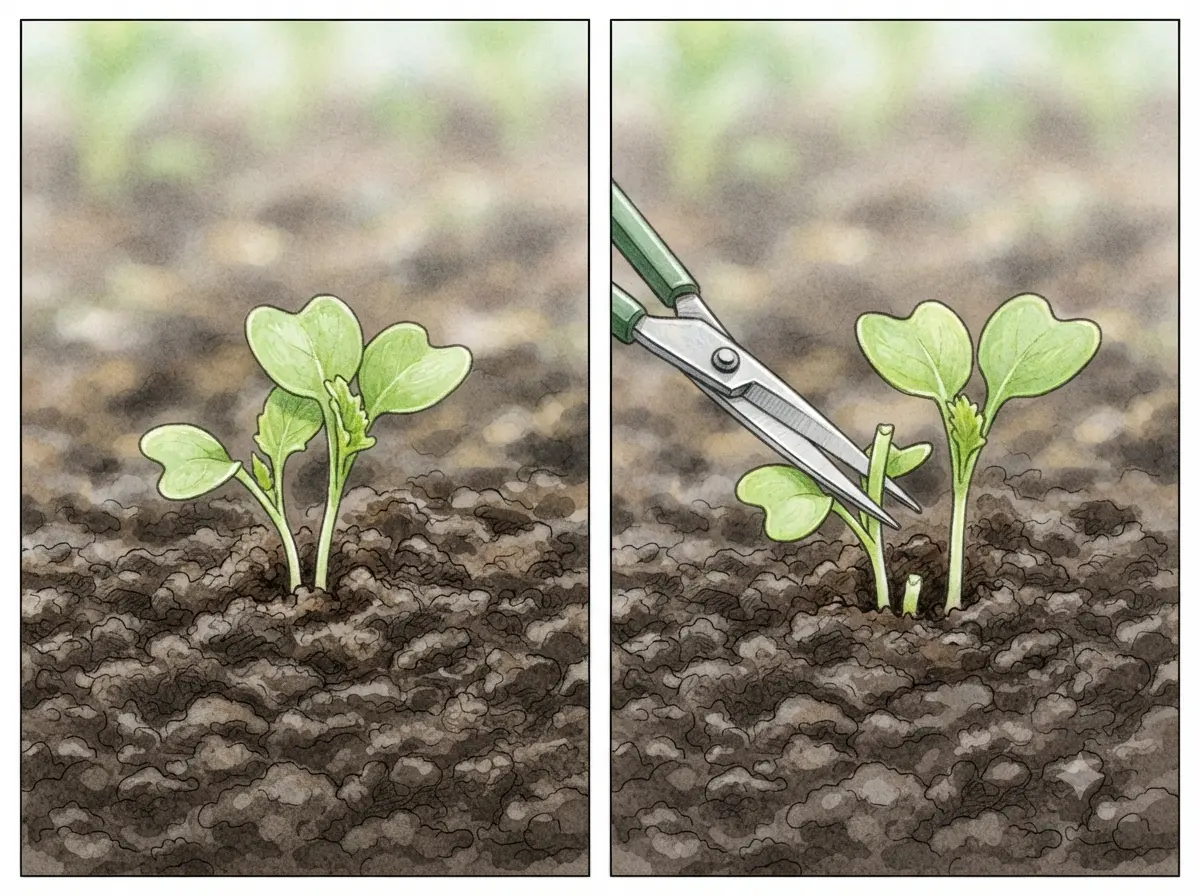
- Check the early seedlings. Where two or more emerge together, keep the strongest one in that position. If seedlings sit tightly together, snip the extra ones at the base to avoid disturbing the roots you want to grow.
Try placing marks on the pot rim before you sow. That gives you a reference if you split the tub into two sowing dates. Leave space next to the edge so you can water without scraping seedlings along the rim. A small batch properly spaced can give you more usable roots than a whole tub left crowded. The Illinois Extension home radish guide explains the effects of crowded seedlings, hot weather, and severe shade.
Water for steady growth, especially in small spaces
While the seeds are coming up, keep the shallow sowing layer moist. During a warm, dry spell, that layer can dry while the lower mix still feels wet. Use a gentle spray or a watering can with a fine rose so the seeds stay covered. Once plants are established, water the mix around them and check that water reaches the root zone.
Don’t wait for the whole tub to dry out and then flood it. The RHS notes that irregular watering can contribute to splitting. If a pot dries quickly even on mild days, check how much mix it holds and whether wind runs directly across the site. You may be able to move it slightly without losing needed light. In a spell of steady rain, look at the drainage holes and move the pot out of standing water.
Compare two spots with your finger before deciding the whole pot needs water. Mixing on the sunny side can feel quite different from mixing in a shaded corner. Water evenly, then check again on the next dry day. A reminder to inspect the pot can help. The decision to water comes from what you find, not from how often the reminder appears.
Harvest by checking the shoulder and one test root
As roots begin to enlarge, you may see the top of a radish at the soil surface. Brush a little loose mix aside without pulling the plant. Look at the widest part you can see and compare it with the variety description. A root that is still slender may need more time. If a few look about right, pull one and cut it to check texture.
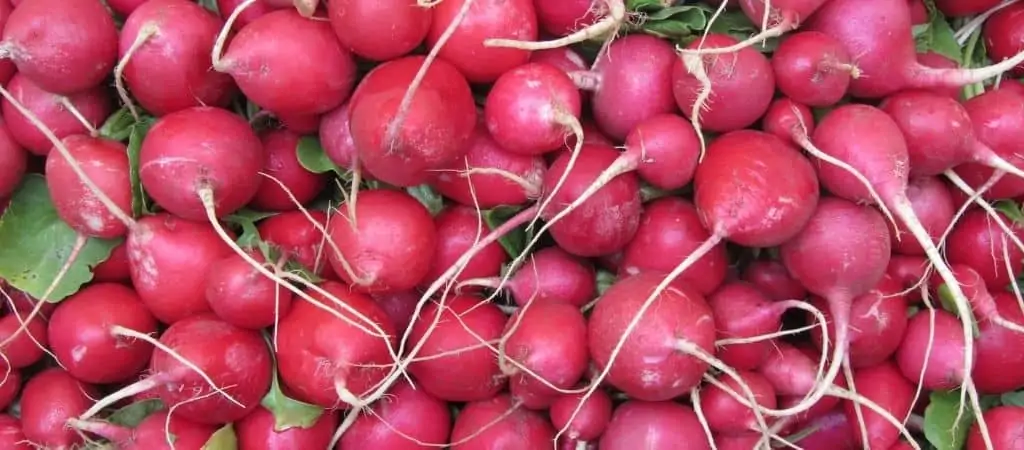
Harvest the usable roots first and leave smaller ones a short while if the plants stay healthy. Check regularly during good growing weather so tender roots do not sit until they turn spongy or woody. A large leaf canopy doesn’t mean all the roots underneath developed together. If you planted in two sections, keep the sowing dates separate when deciding which roots to test.
Lift a radish gently by the base of the leaves, or loosen the mix beside it if the root doesn’t come up easily. Avoid pulling several neighboring plants by accident. Once you harvest a section, clear any old debris and consider sowing again if the weather still suits salad radishes. If a hot spell is approaching, wait for the next suitable window rather than assuming the second batch will behave like the first.
Why leaves grow, but the radishes stay thin
Several plants share one small spot. Look at the bases of the stems rather than the spread of the leaves. Thin seedlings early. If the crop has already spent weeks crowded, keep a few of the better-spaced plants and sow another section correctly so you can compare.
The weather turned hot, or the plants started flowering. If a central stem grows upward and begins forming flower buds, the plant is bolting. A partly formed root may already be tough. Start a fresh sowing when the weather is cooler for the variety. In warmer parts of India, that may mean a brief local winter window. On a cooler hill site, observe the season and use the packet guidance rather than copying dates from a different city.
The balcony doesn’t get enough light. Check how much direct light actually hits the foliage, particularly after buildings cast their late-day shadows. Plants that stretch or lean strongly may benefit from a brighter spot. If the pot must stay where it is, a leafy crop suited to that site may be a better use of it.
The roots split or taste woody. A split can follow fluctuating moisture. Woody or spongy centers can follow harvesting late or growing the crop in unfavorable weather. Compare the days since sowing and your watering notes before changing the pot or the variety. Sow a few fewer next time so you can pick and use them promptly.
Keep the next sowing small
Start with one part of the tub and leave the rest for a later sowing. Mark the dates on two labels. You can also use two small containers if that makes it easier to give each group the right light and moisture. Compare the first sowing time, the first true leaves and the first usable root before changing your method. What matters most is having a crop ready when you want to eat it.
Write down the variety, sowing date, and date you pulled the test root. A single line can tell you whether the same seed works well in your cooler months. If you like the crop but wish you had more at once, plant a wider tub rather than squeezing the plants closer. For more crops that fit balcony containers, see our guide to winter vegetables in pots.
If a small batch performs poorly, change one thing before you restart. Keep the same seed and move it to a brighter spot, or keep the site and widen the spacing. Comparing two small sowings tells you more than changing the seed, pot, watering, and location all at once.