
Choose small-leaved Kasuri-type methi if repeat picking is your main goal. For a trial cut, clip tender tips and leave healthy leaves and a few stem joints on each plant. Common methi can be less dependable for repeat cuts, so sow a second pot if you need another bunch on a particular date.
A pot of fenugreek can look ready before it has much to give. If you pull the whole clump, you get the full first harvest and an empty pot. If you clip a few growing tips, you give healthy plants a chance to branch and produce more leaves. Choose between those two approaches before you start cutting.
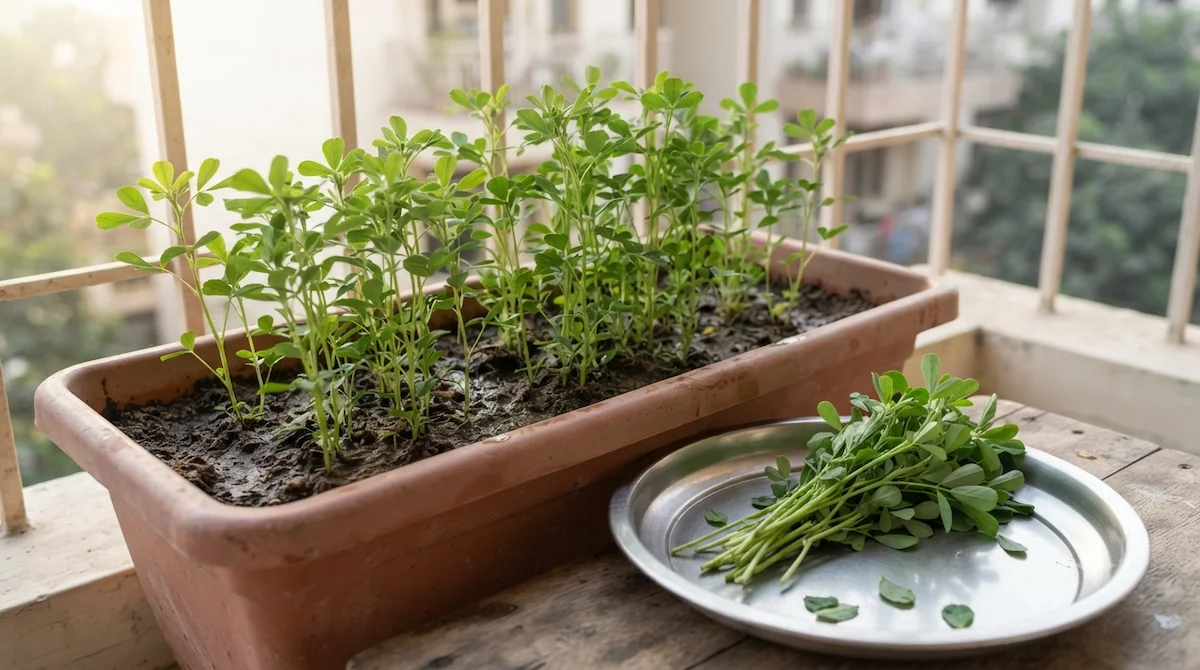
Decide what you want from the first cut
| Your goal | What to harvest | What to leave |
|---|---|---|
| A few sprigs for the next meal | Clip tender tips from several established plants. | Leave lower leafy stems and most of the pot growing. |
| A larger bunch today | Cut a section, or take a whole batch you plan to replace. | Keep another section untouched for the next meal. |
| Try for another picking from the same stems | Take a modest cut above healthy leaf joints. | Keep lower leaves attached and watch for new side shoots. |
| Collect seed later | Harvest lightly elsewhere. | Leave a separate group to flower and form pods. |
These are different ways to use the pot. A close, uniform cut can give a bigger bunch, but you have less leafy growth left to judge. For a first regrowth trial, leave more stem and leaves than you would in a one-time harvest. If the first section responds well, you can use the same approach on the next part of the pot.
Check which kind you have. Garden Organic distinguishes common, larger-seeded white-flowered fenugreek from a smaller-seeded, yellow-flowered type it recommends for repeated cuts. If you bought a packet labelled only “methi,” check the supplier or treat regrowth as an experiment. Reserve some seed for a later sowing. You can still get a useful leaf crop even if your first pot gives just one worthwhile bunch.
How to tell whether methi is ready to pick
Look for several sets of true leaves and enough upright growth to give you a worthwhile harvest. Methi has leaves with three leaflets. Choose stems with tender tips and healthy lower growth. A seedling with just a couple of small leaves offers little to take if you want it to keep growing.
A calendar can tell you when to start looking. Garden Organic’s fenugreek guide describes taking a leaf crop when the plants reach about 25 cm (around 10 inches) tall and says leaf quality declines after flower buds appear. That example is a harvest guide, and pot-grown plants may be shorter or take longer to reach a useful size. Look at the stems, the amount of foliage and the presence of buds rather than waiting for an exact day.
To see whether you have enough, gather the tips loosely with your fingers before you cut. If a small handful requires you to remove nearly all the green growth, leave the plants longer or harvest them as a one-time crop. Small leaves from a developing pot can be handy for a little flavour. A full cooked dish may need more plants than one small container can grow at once.
Make a light first cut for regrowth
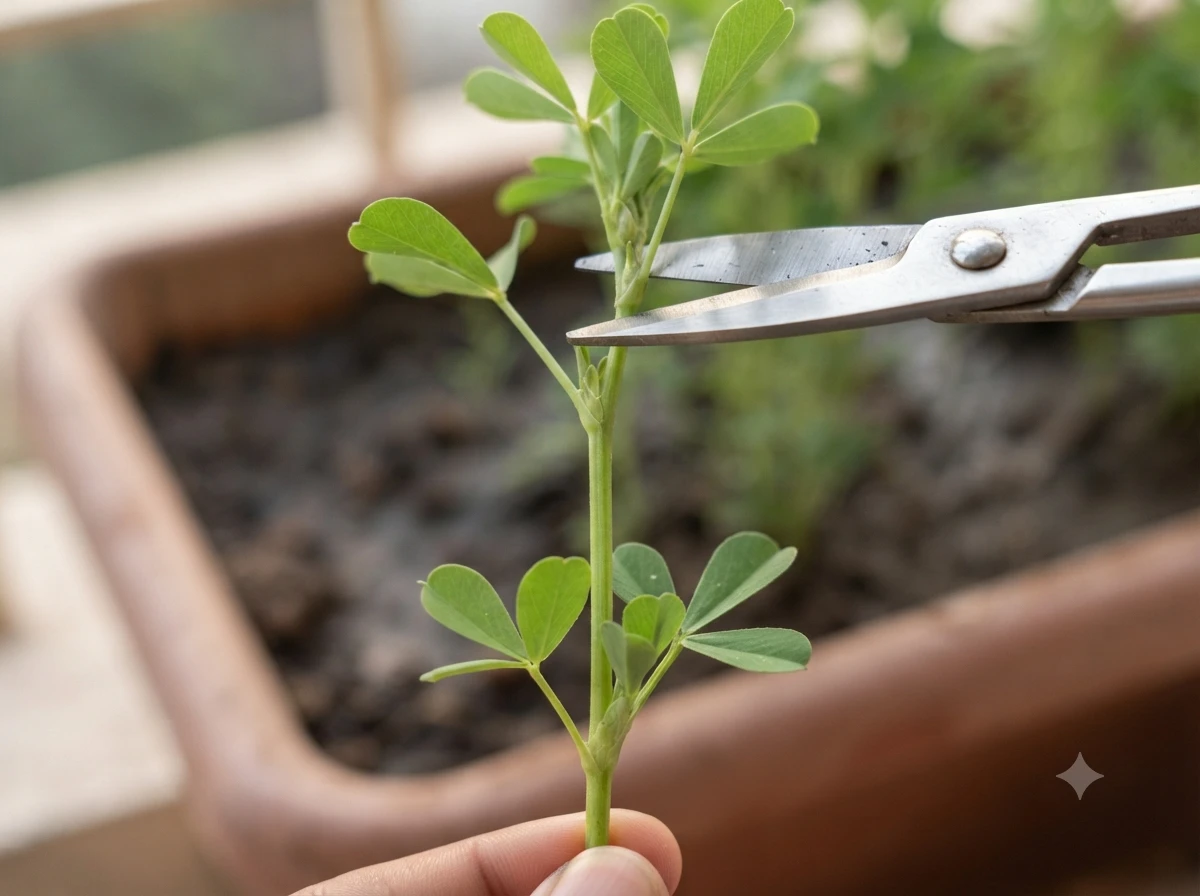
- Pick the strongest part of the pot. Choose a section with upright stems and good leaf colour. Leave weak seedlings or a newly thinned patch alone while it settles.
- Find a leaf joint before cutting. A joint, or node, is the point where the leaf joins the stem. Clip the tender top just above a healthy joint. Leave several leaves and at least one healthy joint below each cut.
- Take a few stems at a time. Use clean scissors and support the stems lightly. Avoid cutting into lower stems that you intend to keep or tugging at roots near the surface.
- Mark the section and date. A simple label helps if you harvest the rest of the pot a few days later. Check the lower joints for fresh buds or shoots before planning another cut.
Agricultural recommendations vary with the crop and purpose. The Assam Department of Agriculture’s fenugreek production guidance treats leaf cutting and seed production separately. SKUAST’s vegetable production guide describes more than one picking for Kasuri methi. For a home pot, check the packet for small-leaved Kasuri methi and start with a lighter cut. Observe how the individual plants respond before taking a second cutting.
Look after the pot between pickings
Keep the pot in the light that supported the first crop. A rail or taller planter can cast a different shadow as the season shifts. If the remaining stems lean towards one side or new growth turns pale and thin, check where light actually reaches the leaves. Move the pot to a brighter, suitable spot if possible.
Check the mix below the surface and water when it needs it. After a harvest, there is less foliage using water, and a shaded container may stay wet for longer than you expect. Check before watering from habit. When you do water, wet the mix evenly and let the excess drain. Empty any saucer that holds water at the base.
Give the plant time to respond before adding fertilizer. A clipped stem with healthy lower leaves can still grow. If growth stays slow, check light, moisture, and weather first. Extra fertilizer is unlikely to fix a crowded or waterlogged pot. If the roots are competing in a thin layer of mix, a fresh sowing in a better container may be quicker than trying to make a weak batch recover.
How to know when there is enough for a second picking
Look for side shoots opening and developing leaves you can comfortably spare. A small bud at a leaf joint is a promising sign. Let it grow rather than clipping it as soon as it appears. Look again after several days. Growth may be slow in cool, dull weather, so judge by the actual shoots instead of expecting a fixed interval.
Leave a few of the shortest plants uncut for comparison. If the clipped plants produce healthy side shoots and the untouched ones are still leafy, use the stronger sections in turn. If almost every stem stops growing or starts forming flower buds, take whatever usable leaves remain and clear the pot for another crop. Waiting longer does not always produce a bigger second bunch.
Make a note of how much you actually use. A light second cut may be just right for a small pan of food. If you want enough for several servings, keep a later sowing ready. It is easier to split a tray into two dates than to guess how much an older pot will produce after cutting.
Why methi may give only one useful harvest
The first cut removed nearly all the leafy stems. Check for healthy buds and green tissue near the base. If little remains and there are no fresh shoots, start a new batch. Next time, clip just a few tips from a marked section and compare it with an untouched group.
Plants were crowded and weak before the cut. Check the stems near the surface. A tight mat can leave little sturdy growth lower down. When you sow the next pot, leave enough room for individual stems to grow and air to move between them. Ontario’s fenugreek crop profile describes spacing for bunching and herb production. Use cultivar instructions and pot width to adapt that idea at home.
Weather changed between pickings. A balcony can be cool in the morning and hot against a wall later. A short stretch with low light may also slow new growth. Check whether the pot has dried right through or stayed wet for several days. Correct what you can, then choose a fresh sowing date suited to your location.
Flower buds started to form. A plant moving into flowering may give you fewer tender leaves. Pick usable foliage before the tips toughen. If you want to plant seeds, put that job in a separate pot and let those plants grow through flowering and pod development without repeated leaf cuts.
Plan a steady supply with two containers
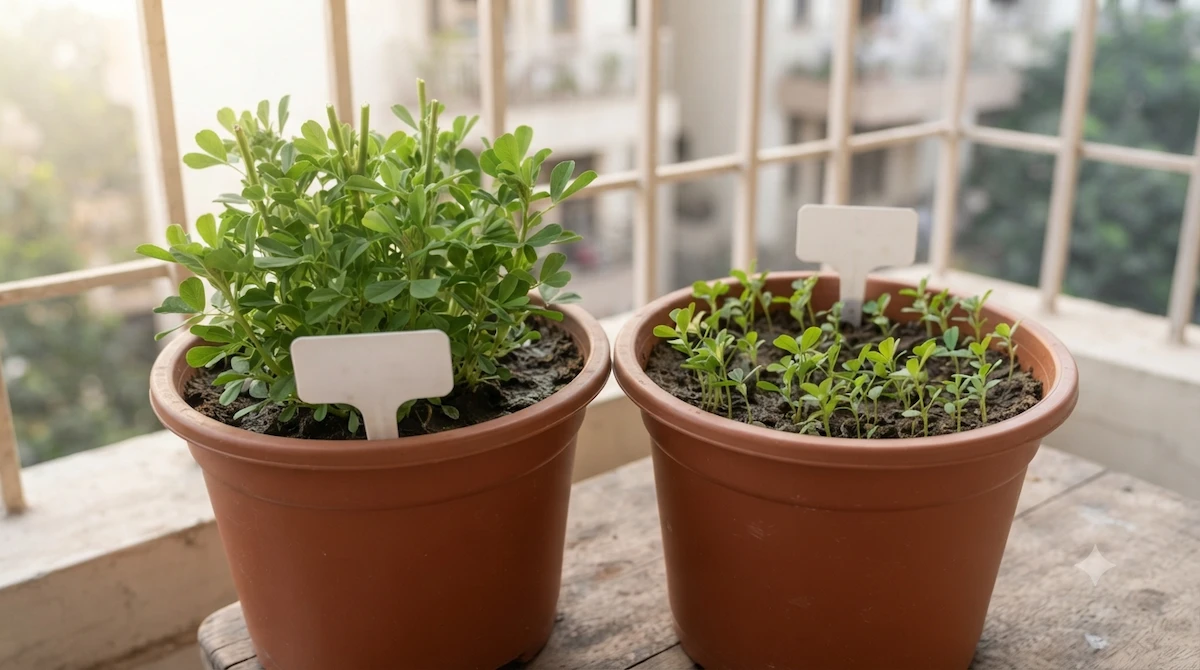
Start a small pot first. When its seedlings are growing well, sow a second pot or mark off a fresh section of a wide trough. Check the weather and avoid sowing a new batch just because a fixed interval has passed. Write both dates on labels. Once the first pot gives you a harvest, you can see whether its stems are recovering while the second starts to fill out.
On a small balcony, move the newer pot into the brighter spot if it is sitting behind a taller one. Keep the first and second batches separate while you learn how much each supplies. For the sowing stage, see our guide to growing fenugreek at home. If you want more cool-season options for nearby pots, see our winter vegetable container guide.
Record the first cut, the first new shoots, and the amount you used from each pot. Next season you can adjust the sowing dates to fit your meals. A productive routine might include a light cut from one pot and a whole harvest from another. The point is to keep useful leaves coming while the weather suits the crop.